
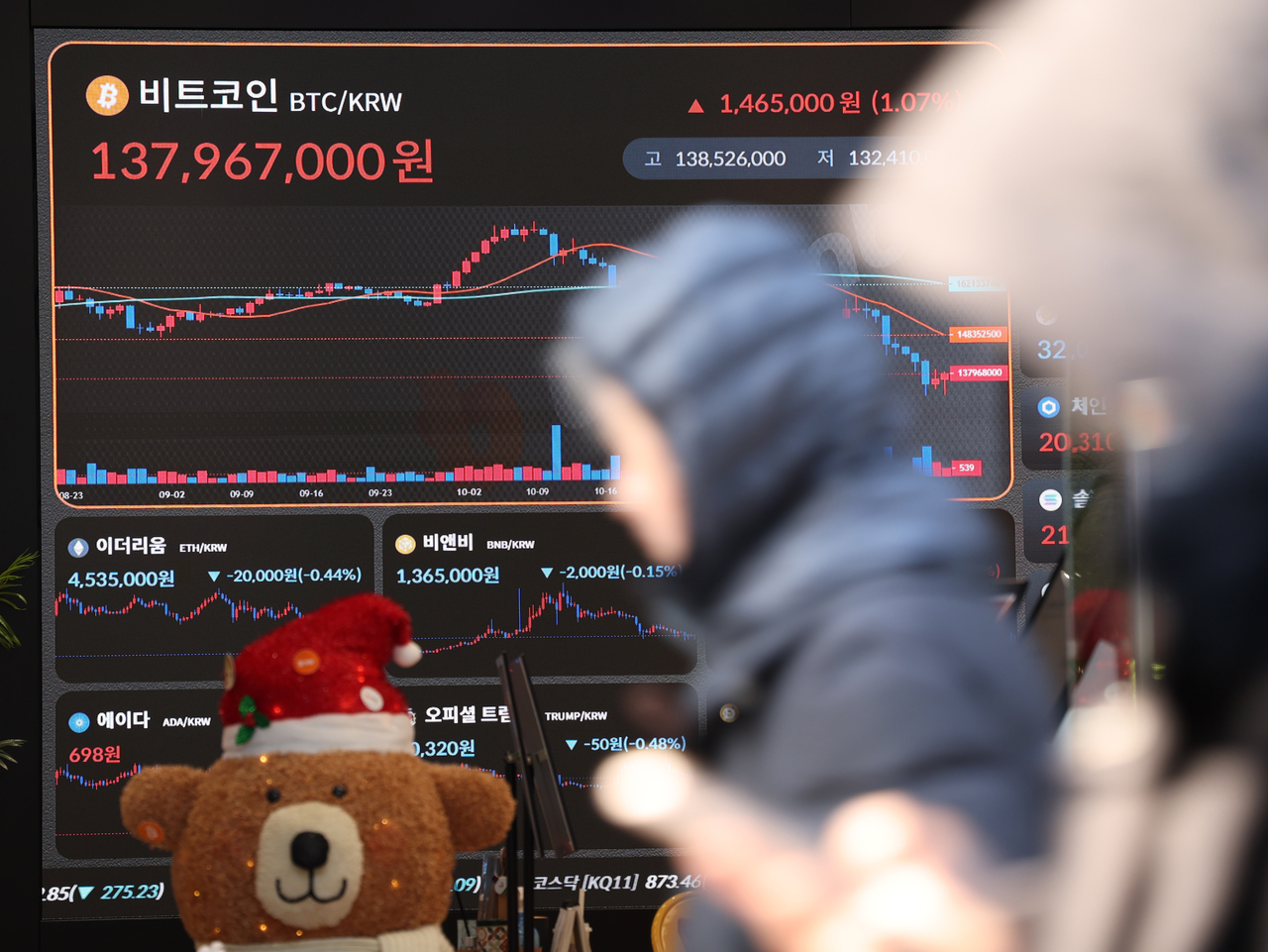
South Korea has yet to fully open the door to corporate cryptocurrency trading, but local exchanges are already racing to win over institutional clients, a segment widely seen as the key to deepening liquidity and stabilizing the country’s volatile virtual asset market.
Earlier this year, the Financial Services Commission took its first cautious step by allowing a limited set of entities, including law enforcement agencies, nonprofits and virtual asset service providers, to conduct crypto transactions. Their activities, however, were confined to liquidating digital assets already in their possession.
To lay the groundwork for broader institutional participation, the FSC also announced plans for a pilot program in the second half of this year that would allow select financial institutions to trade crypto. But with November drawing to a close, the initiative has yet to materialize. The FSC’s Virtual Asset Committee, responsible for setting policy, has not convened since its fourth session in May, leaving the industry without a clear timeline or regulatory blueprint.
Despite the policy vacuum, major exchanges are pressing ahead.
Upbit, Korea’s largest crypto exchange, now counts more than 160 corporate clients, the first in the industry to pass the 100-client mark. In August, it launched Upbit Custody, an institutional-grade service that stores client assets entirely in cold wallets to guard against cyberattacks. It is also developing a block-trading platform to support large-volume corporate orders.
Bithumb, the No. 2 exchange, hosted a conference in October to introduce its corporate services and walk companies through cryptocurrency accounting rules, one of the biggest hurdles to institutional adoption.
Industry officials expect meaningful institutional trading to begin no earlier than the first half of next year, noting that corporations will need time to update their internal investment policies, risk frameworks and accounting systems once guidelines are released.
“In recent months, inquiries from corporations about investment procedures and regulatory requirements have surged,” an official at a major exchange said. “Institutional participation will boost liquidity, reduce price volatility and help create a more stable and reliable investment environment.”
By Im Eun-byel (silverstar@heraldcorp.com)