
Amazon Web Services Korea is accelerating infrastructure investment this year while expanding into the public sector and advancing agentic AI, aligning its strategy with the government’s ambition to position South Korea among the world’s top three in artificial intelligence.
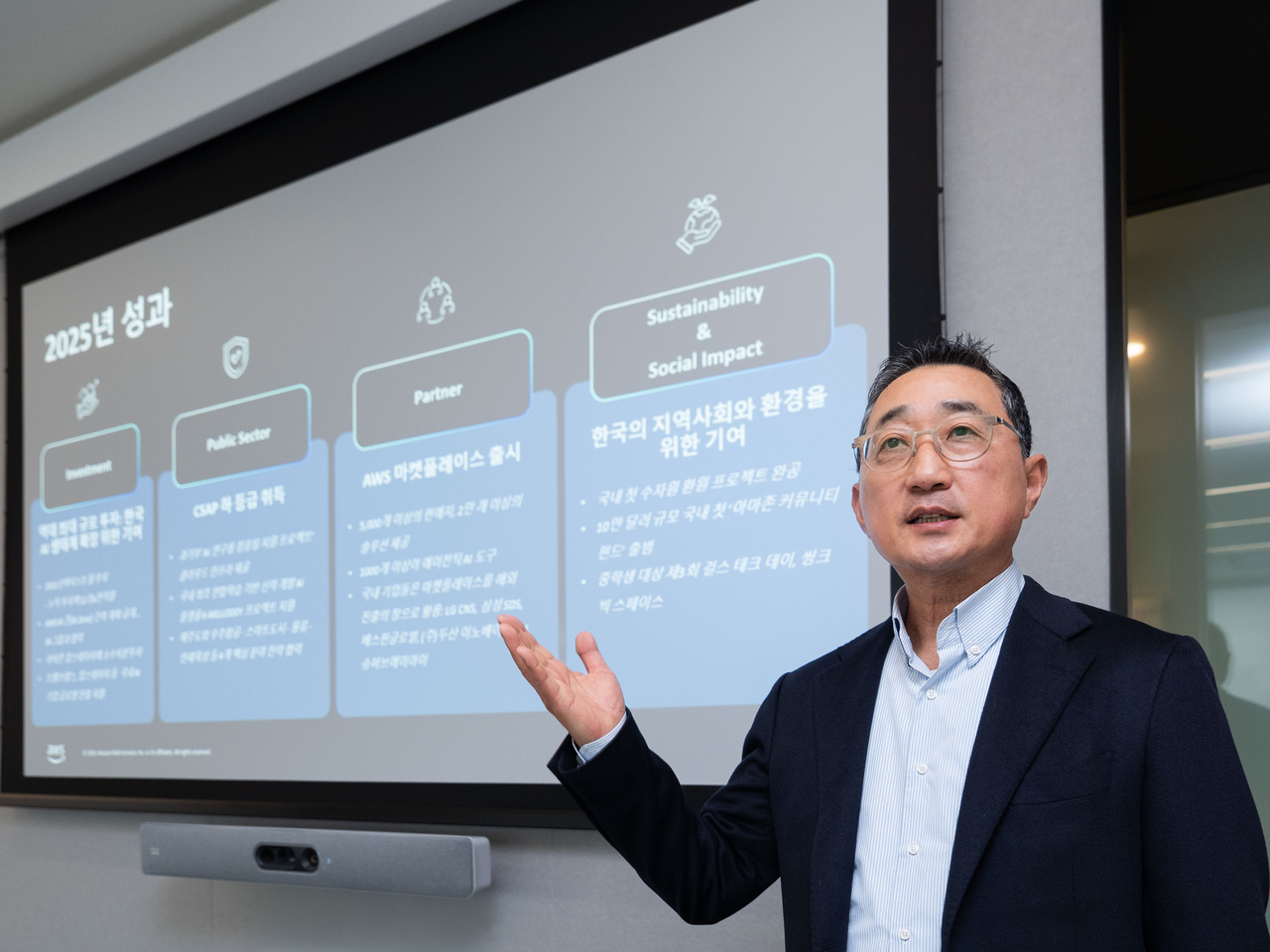
“We will do our utmost to provide greater convenience for customers in Korea and contribute to Korea’s leap toward becoming one of the world’s three leading AI nations, as proposed by President Lee Jae Myung,” AWS Korea managing director Ham Kee-ho said Tuesday at a press conference in Seoul.
The government aims to make Korea a top AI nation by 2027 through large-scale procurement of graphics processing units, expanded data infrastructure and the development of domestic foundation models.
In October, AWS CEO Matt Garman met the president in Gyeongju, North Gyeongsang Province, where he announced plans to invest more than $5 billion in Korea by 2031, including new AI data centers in Incheon and Gyeonggi Province. Combined with earlier commitments, AWS’ total planned investment in Korea is projected to exceed $9 billion by 2031 — the largest amount ever by a single foreign company in the country.
“We will continue expanding investment and upgrading AI infrastructure across public and industrial sectors to strengthen Korea’s competitiveness,” Ham said.
Beyond capital spending, Ham emphasized the structural impact of AI adoption. He predicted that by 2029, at least five Korean companies could generate $100 billion in annual revenue with fewer than 12 employees, driven by AI-native operating models.
“More than 60 percent of Korean companies are already using multiple AI models in daily operations,” he said. “If this trend continues, we could see ultralean, high-revenue firms emerge.”
According to AWS estimates, 6 in 10 Korean firms have introduced AI agents. Yet challenges remain. According to market research firm International Data Corp. Korea, half of Korean companies cite a lack of clear guidelines as their biggest obstacle to AI deployment — 5.9 percentage points above the global average.
“We have entered the AI-native era,” Ham said, describing a shift from AI as a support tool to systems capable of autonomous task execution.
He added that AWS’ recently announced $50 billion strategic partnership with OpenAI would act as “a powerful engine” to accelerate Korean companies’ adoption of AI agents.
By Jie Ye-eun (yeeun@heraldcorp.com)