

Washington launches more powerful Section 301 investigation into 16 economies, raising risk of new tariffs
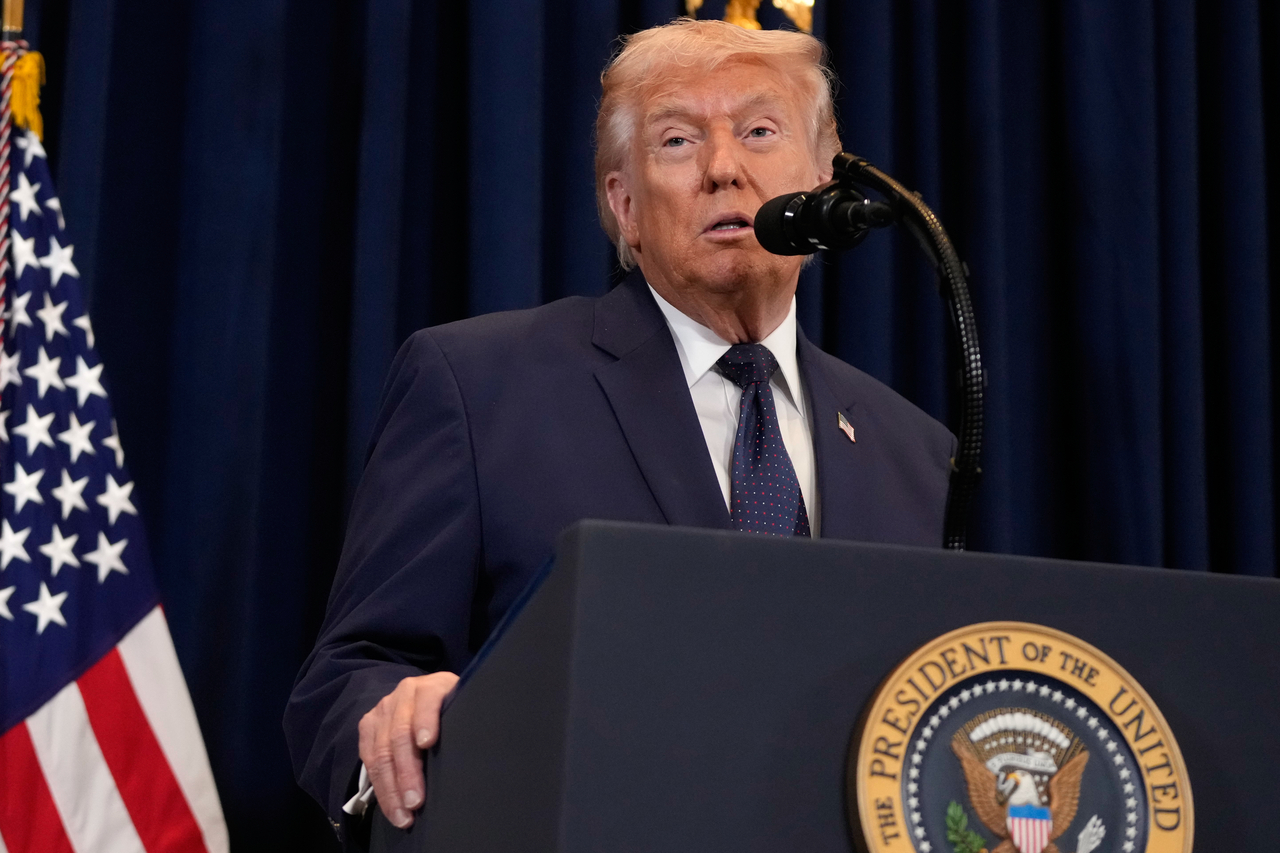
The US has launched a sweeping trade investigation into 16 key trading partners, including South Korea, China and Japan, in a move that could set the stage for new tariffs as the Trump administration seeks to restore duties recently struck down by the US Supreme Court.
The US Trade Representative Jamieson Greer said Wednesday his office would begin a probe under Section 301 of the 1974 Trade Act. The legal tool allows Washington to investigate foreign trade practices deemed unfair, and depending on the findings, impose tariffs or other trade restrictions.
The investigation, which could take months, covers some of US’ largest trading partners, including Bangladesh, Cambodia, China, the EU, Indonesia, Japan, Malaysia, Norway, Singapore, South Korea, Switzerland, Thailand, Taiwan and Vietnam.
"So these investigations will focus on economies that we have evidence appear to exhibit structural excess capacity and production in various manufacturing sectors, such as through larger persistent trade surpluses or underutilized or unused capacity," Greer told reporters on a conference call on Wednesday.
The investigation marks a step for the Donald Trump administration to revive its tariff framework, following last month’s landmark Supreme Court ruling that invalidated Trump’s “reciprocal tariffs” imposed on nearly all trading partners under the 1977 International Emergency Economic Powers Act.
Tariffs remain a central pillar of the Trump administration, and the US president has vowed to pursue alternative legal measures to maintain them.
After the ruling, Trump turned to another legal mechanism, Section 122 of the Trade Act of 1974, to impose a temporary 10 percent tariff on imports from all trading partners, a measure that is expected to expire in July.
The newly initiated Section 301 investigation is widely viewed as the administration’s attempt to establish a more durable legal basis for tariffs that could eventually replace the temporary duties. Section 301 was used during Trump’s first administration to justify high tariffs on Chinese imports, many of which remain in place today.
Implication for Seoul
In a notice published on a Federal Register, the USTR said South Korea shows signs of structural excess capacity and production reflected in large and persistent trade surpluses.
“Korea maintains a global goods trade surplus, led by exports in sectors such as electronic equipment, automobiles and auto parts, machinery, steel, and ships and marine vessels,” it said. “Korea’s bilateral goods and services trade surplus with the United States increased to $56 billion over the course of 2024, and remained around $49 billion over the four quarters through June 2025.”
The notice also said the South Korean government has acknowledged the need to reduce capacity in the petrochemicals sector.
For South Korea, the direct impact may be limited, though some sectors could face closer scrutiny
“Steel and petrochemicals are more likely to be targeted because they have been associated with global oversupply,” said Jang Sang-sik, head of the International Trade and Commerce Institute at the Korea International Trade Association. "Shipbuilding, electronics and automobiles may have more room for negotiation given Korean companies’ significant investments in the US.”
On Wednesday, South Korea’s presidential office said it will “actively consult” with the US to ensure that the “balance of interests secured in the existing S.Korea-US tariff deal is not undermined, and that South Korea does not receive treatment less favorable than other major countries.”
Trade experts say tariffs in the range of about 15 percent, similar to the reciprocal tariffs previously applied to South Korea, could be applied under Section 301.
South Korea’s Industry Ministry said it had already received a formal consultation request from the USTR — one of the steps in the investigation — and plans to submit an official position after gathering industry feedback.
“The deadline for written submission is April 15, and we plan to coordinate closely with industry before submitting the government’s official opinion,” a senior industry ministry official said, adding that several public hearings will be held in May and that the government will respond actively.
Asked whether additional Section 301 investigations could be launched on issues such as discriminatory treatment of US companies and digital goods and services, the ministry said it was difficult to predict.
“At this stage, the focus appears to be on restoring tariffs that were invalidated by the Supreme Court,” the official said. “The USTR could pursue additional Section 301 consultation with other trading partners later, but nothing beyond the current investigations has been formally confirmed.”
Uncertainties loom
Analysts caution that it remains unclear which sectors or policies the US will ultimately target, as the term “various manufacturing sectors” is broad and could eventually cover more sensitive areas such as digital regulations and non-tariff barriers.
“For now, it is not clear which specific measures or sectors will become issues,” said Lee Jae-min, a professor of law at Seoul National University. “The US and Korea interact across many areas, from digital platforms to non-tariff barriers, which the US has mentioned many times. So a broad range of issues could be examined going forward.”
Lee added that Section 301 is legally more robust — though structurally slower — than the now-nullified IEEPA to impose tariffs.
“The earlier reciprocal tariffs were struck down because they violated provisions of the IEEPA,” he said. “Section 301 provides a clear legal basis for penalizing what the US considers unfair trade practices, and is less vulnerable to legal challenges."
However, he added that the scale of the probe could make the process lengthy; the US is launching investigations against 16 economies simultaneously, which will require extensive fact-finding and negotiations.
Jang echoed Lee’s stance that Section 301 gives Washington broad authority to impose various forms of trade penalties.
“The latest investigation did not include digital issues, but if it is deemed problematic in the future, it could take issue in the future,” said Jang. “If Washington concludes that the current practices are harming US industries, it can deploy a wide range of strong measures, from tariffs and quotas to import restrictions.”
Greer had indicated that additional investigations could follow in areas of concern, with potential targets such as digital services taxes, pharmaceutical pricing policies, market access barriers for rice and seafood, and environmental issues such as marine pollution.
Washington has grown increasingly vocal about South Korea's regulatory policies affecting US digital companies, including platform regulations and recent amendments to South Korea’s telecommunications laws.
By Ahn Sung-mi (sahn@heraldcorp.com)