
Korea Zinc said Thursday it has officially kicked off its $7.4 billion project to build a large-scale mineral processing facility in Tennessee, as the world’s largest zinc smelter accelerates efforts to expand its supply chain in the US.
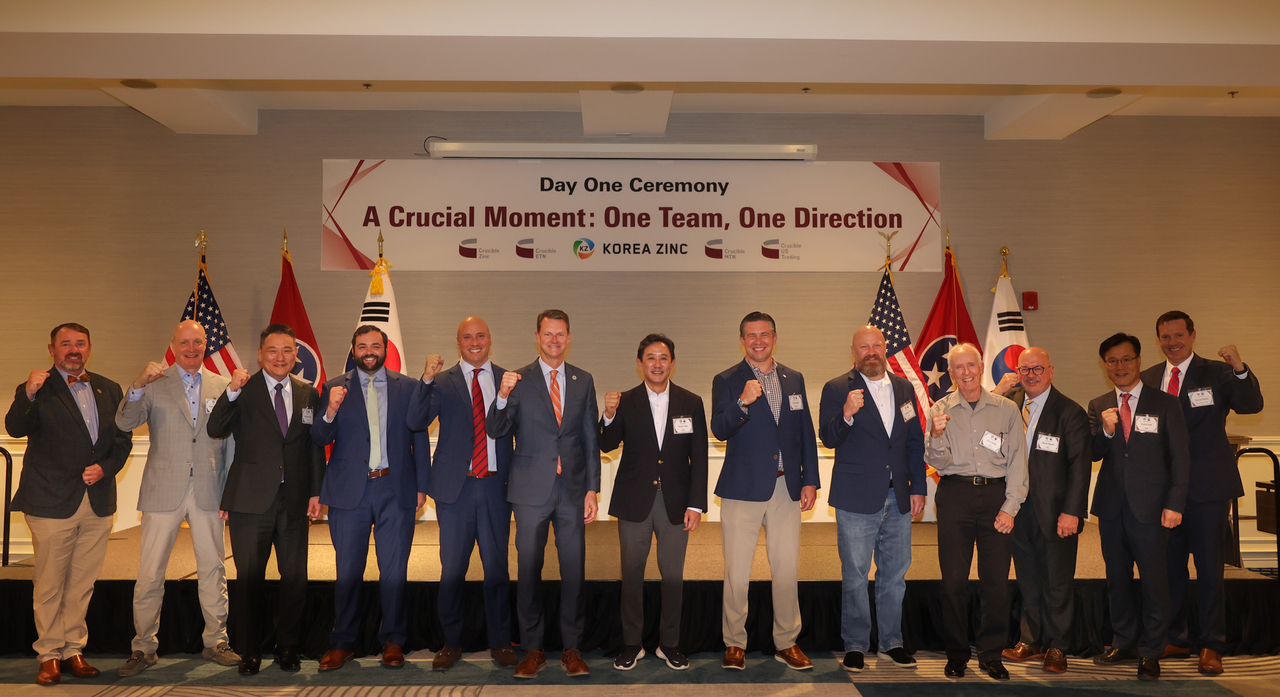
The company held a ceremony in Clarksville on Wednesday to mark the formal start of “Project Crucible.” Attendees included Korea Zinc Chair Choi Yun-beom and senior executives, such as President Park Ki-won, who heads the project. US officials present included Stuart McWhorter, deputy governor of Tennessee, and Erin Hutchens, regional director at the Tennessee Department of Economic and Community Development.
Korea Zinc plans to build a smelter complex in Clarksville spanning 650,000 square meters. Construction is set to start in 2027 with full commercial operations expected by 2029. Once completed, the facility will produce 13 nonferrous metals, including 11 minerals designated as critical by the US government, as well as semiconductor-grade sulfuric acid.
The company's $7.4 billion investment in the facility is backed by the US government and other strategic investors, including JPMorgan.
“Through Project Crucible, we have begun a journey to open a new future that goes beyond Korea Zinc’s 52-year history and to safeguard national security in critical minerals for future generations,” Choi was quoted as saying at the ceremony.
“We will concentrate all of our capabilities, experience and cutting-edge technology in Clarksville to build the world’s best critical mineral processing facility.”
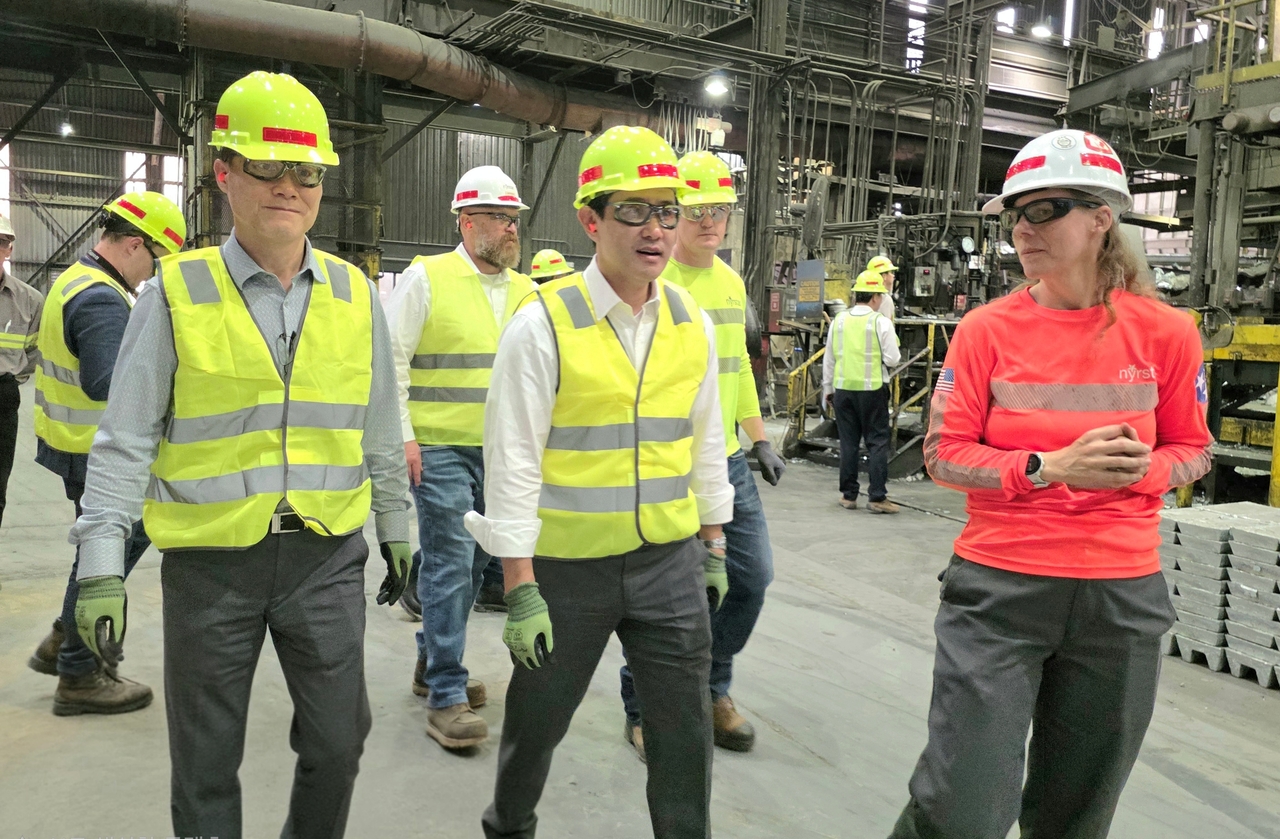
The company recently completed its acquisition of the existing smelter site owned by Nyrstar and other related operations in the area. The company said it will carry out the project by expanding and upgrading the existing facilities while building a new smelter on adjacent land.
Korea Zinc added that it has retained the existing skilled workforce at the Nyrstar smelter and affiliated mining operations.
In addition, Korea Zinc plans to recycle about 620,000 metric tons of smelting byproducts currently stockpiled across five tailings ponds at the Clarksville site to recover critical minerals such as germanium, gallium and indium. The company also plans to source raw materials for the project from two mines owned by the smelter.
By Ahn Sung-mi (sahn@heraldcorp.com)