
LG Group's affiliates are converging on the humanoid robot component market in a pattern that mirrors a playbook the conglomerate has already deployed elsewhere.
In automotive parts and AI data centers, LG has formally branded its cross-subsidiary sales approach "One LG," combining each affiliate's specialty into integrated pitches for single clients. No equivalent label has been applied to robotics yet. But with at least five affiliates now developing humanoid-specific products, the structure is taking recognizable form, with LG preparing to offer robot manufacturers bundled subsystem packages rather than individual parts.
The logic follows how humanoid costs break down. Actuators dominate the bill of materials at an estimated 40 to 60 percent of total build cost. Batteries rank next as a critical constraint, followed by sensing systems. Each of these layers involves manufacturing complexity that favors suppliers with existing scale, and LG affiliates hold established positions in adjacent industries across all of them.
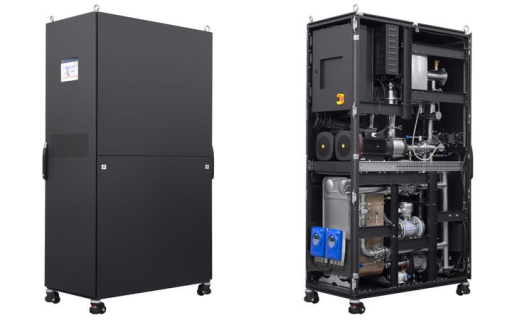
LG Electronics is furthest along. CEO Lyu Jae-cheol told shareholders in March that the company would have mass-production capacity for its Axium actuator line ready by year-end, backed by an appliance motor operation turning out 45 million units annually.
LG Innotek, meanwhile, has begun early output of composite sensing modules combining cameras, lidar and radar for humanoid clients including Boston Dynamics and Figure AI, with CEO Moon Hyuk-soo projecting large-scale production around 2027 to 2028.
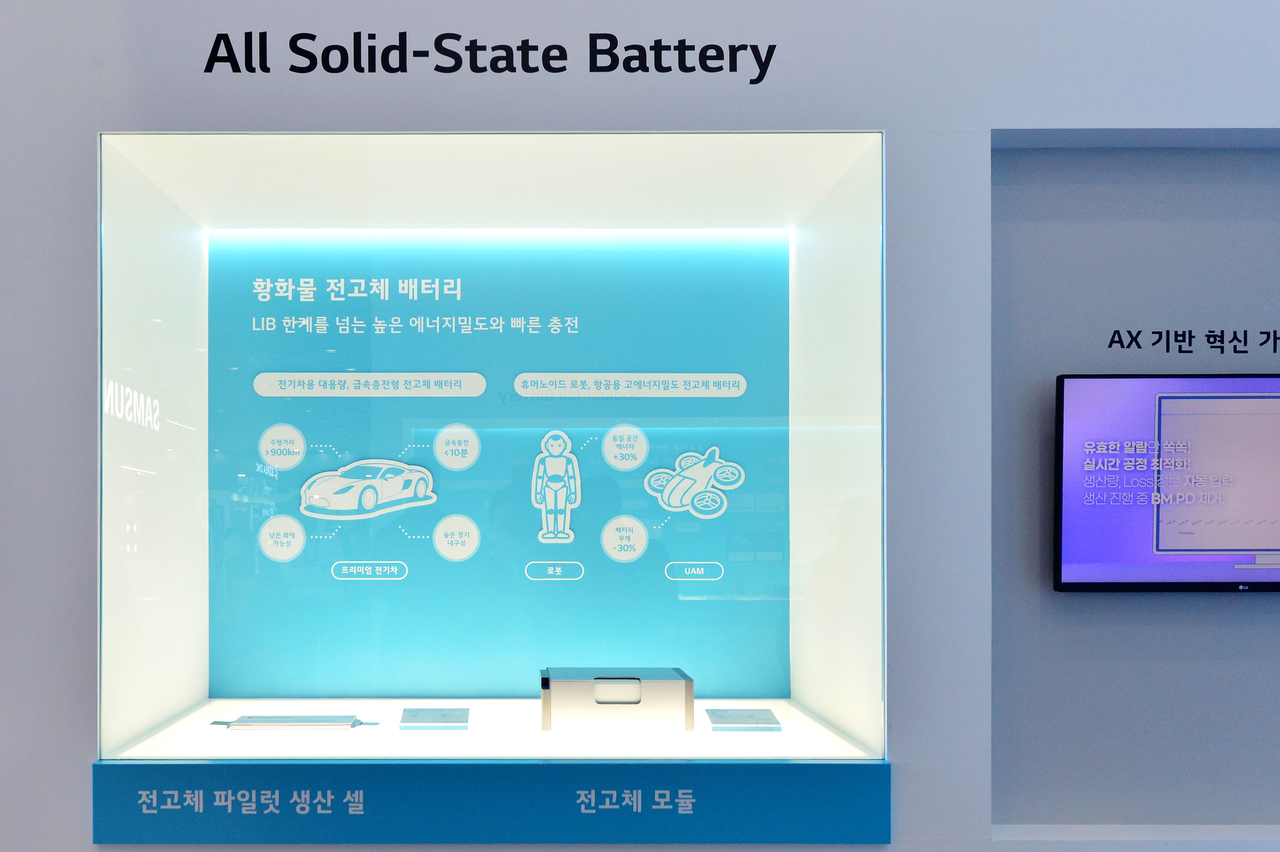
LG Energy Solution is making the most concrete push beyond actuators and sensing. At the InterBattery 2026 exhibition in Seoul in March, the company displayed sulfide-based all-solid-state battery cells designed specifically for humanoid robots. It outlined a dual-track plan: graphite-anode solid-state cells for electric vehicles by 2029, and anode-free solid-state cells for robots by 2030.
The anode-free design maximizes energy density per unit volume, a priority for machines that must fit batteries inside a human-shaped torso alongside dozens of motors and circuit boards.
The company is reportedly in supply discussions with six or more global robotics firms, though no clients have been publicly named. Its current NCMA cylindrical cells already come in variants tuned for robotic workloads, some optimized for sustained operation and others for the high burst output that walking, lifting and catching balance demand.
LG Display and LG AI Research round out the group's coverage. LG Display has demonstrated a 7-inch flexible OLED panel for robot faces, repurposing the curved plastic OLED technology it supplies for Mercedes-Benz dashboards.
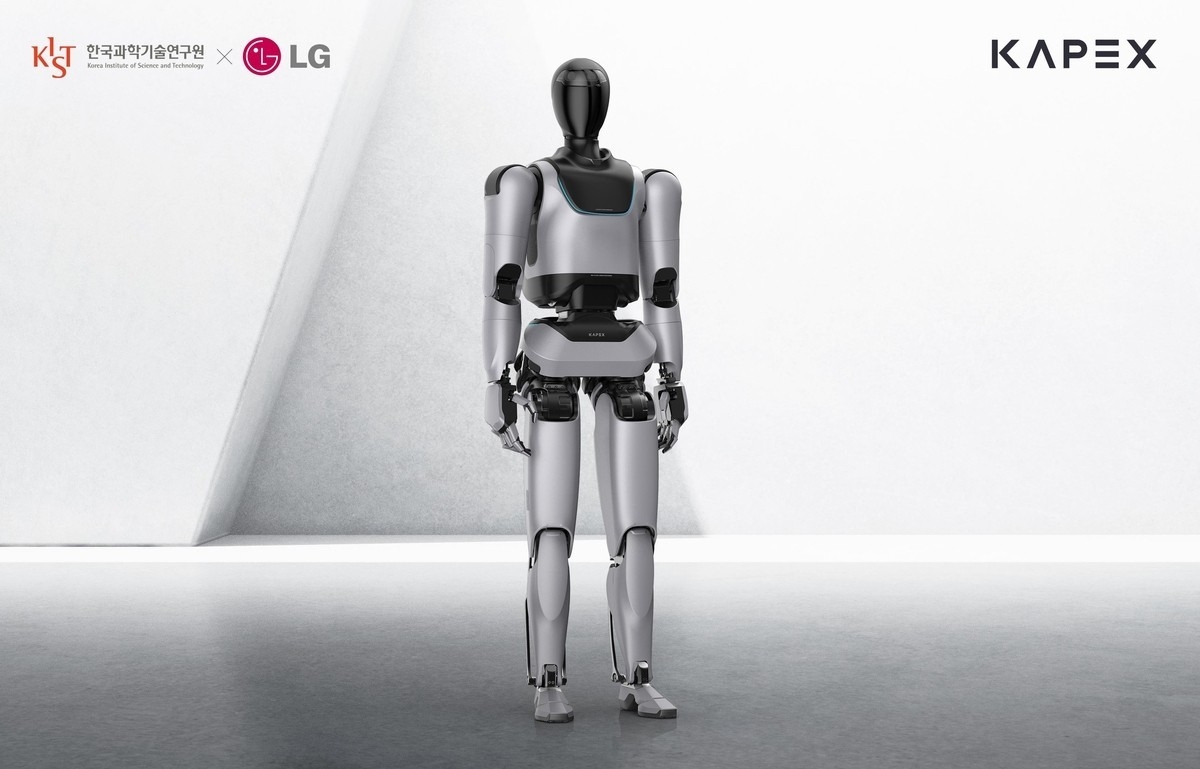
LG AI Research is also developing Exaone 4.5, a vision-language model designed as the cognitive layer for KAPEX, a next-generation humanoid being co-developed with LG Electronics and the Korea Institute of Science and Technology.
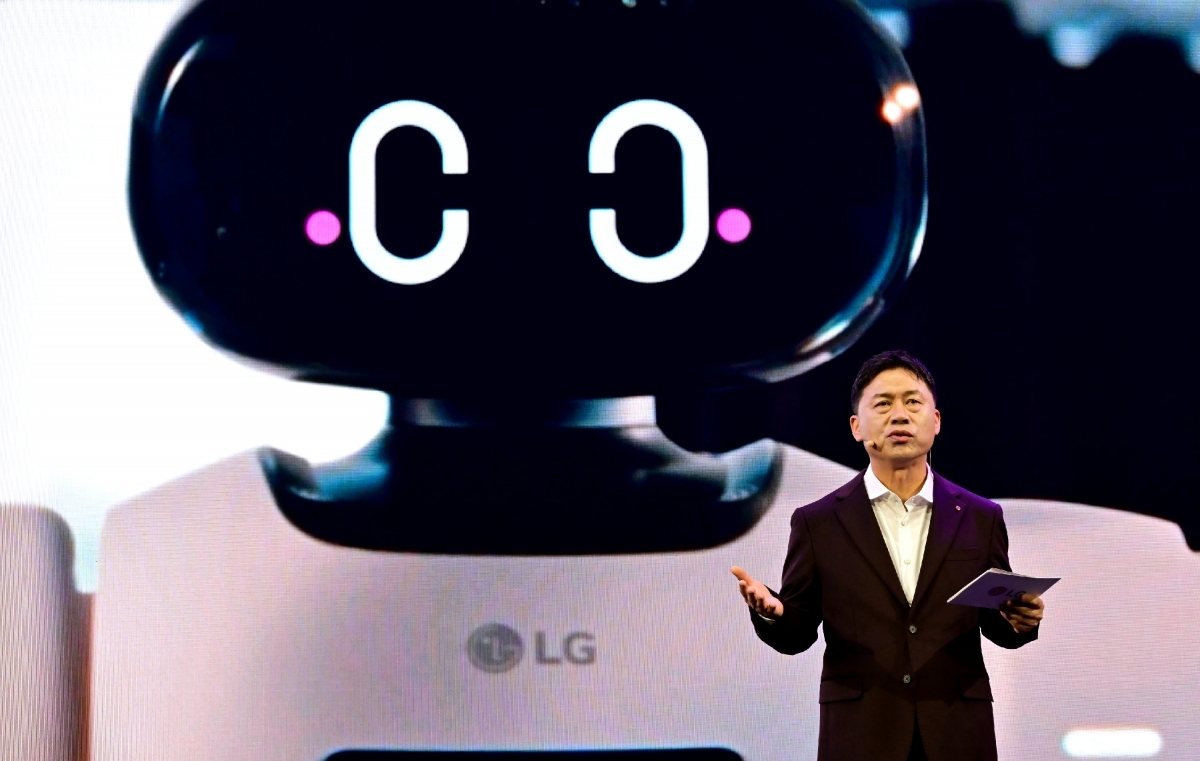
While LG Electronics has its own home robot platform in CLOiD, the group's near-term commercial focus is on the supplier tier. It is positioning affiliates as component vendors to global robot makers, covering actuators, vision modules, batteries and displays across one corporate group. The breadth gives LG a wider scope for winning contracts than vendors that compete in only one category.
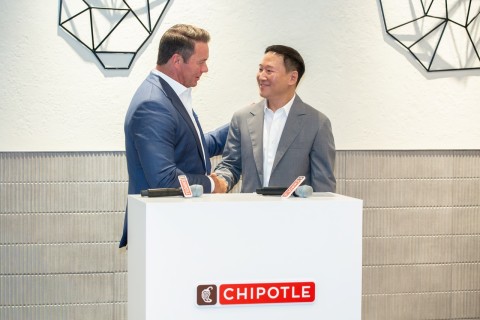
The cross-affiliate bundling model has precedent. In November 2025, the CEOs of LG Electronics, LG Display, LG Energy Solution and LG Innotek jointly hosted Mercedes-Benz Chairman Ola Kallenius in Seoul for an integrated automotive component presentation. Three months earlier, LG affiliates won a 100 billion won ($66.3 million) AI data center project in Jakarta by packaging cooling, power and facility management under one proposal.
Replicating those results in robotics remains unproven, however. LG Electronics has yet to ship actuators externally, and LG Innotek CEO Moon has said meaningful robotics revenue is three to four years away.
"Nothing has been formalized yet, but the pieces are clearly being arranged to make robotics the next growth engine for LG," an industry official said.
By Moon Joon-hyun (mjh@heraldcorp.com)