
South Korea's major business lobby on Wednesday proposed allowing electric vehicle batteries to be owned separately from vehicles to lower the upfront cost burden on customers.
The proposal is part of the Federation of Korean Industries' 100 regulatory reform recommendations submitted to the Office for Government Policy Coordination, based on input from its member companies.
By ministry, the proposals are distributed as follows: 26 to the Land Ministry; 13 to the Trade Ministry; 11 to the Environment Ministry; nine to the Financial Services Commission; six to the Labor Ministry; and five to the Finance Ministry.
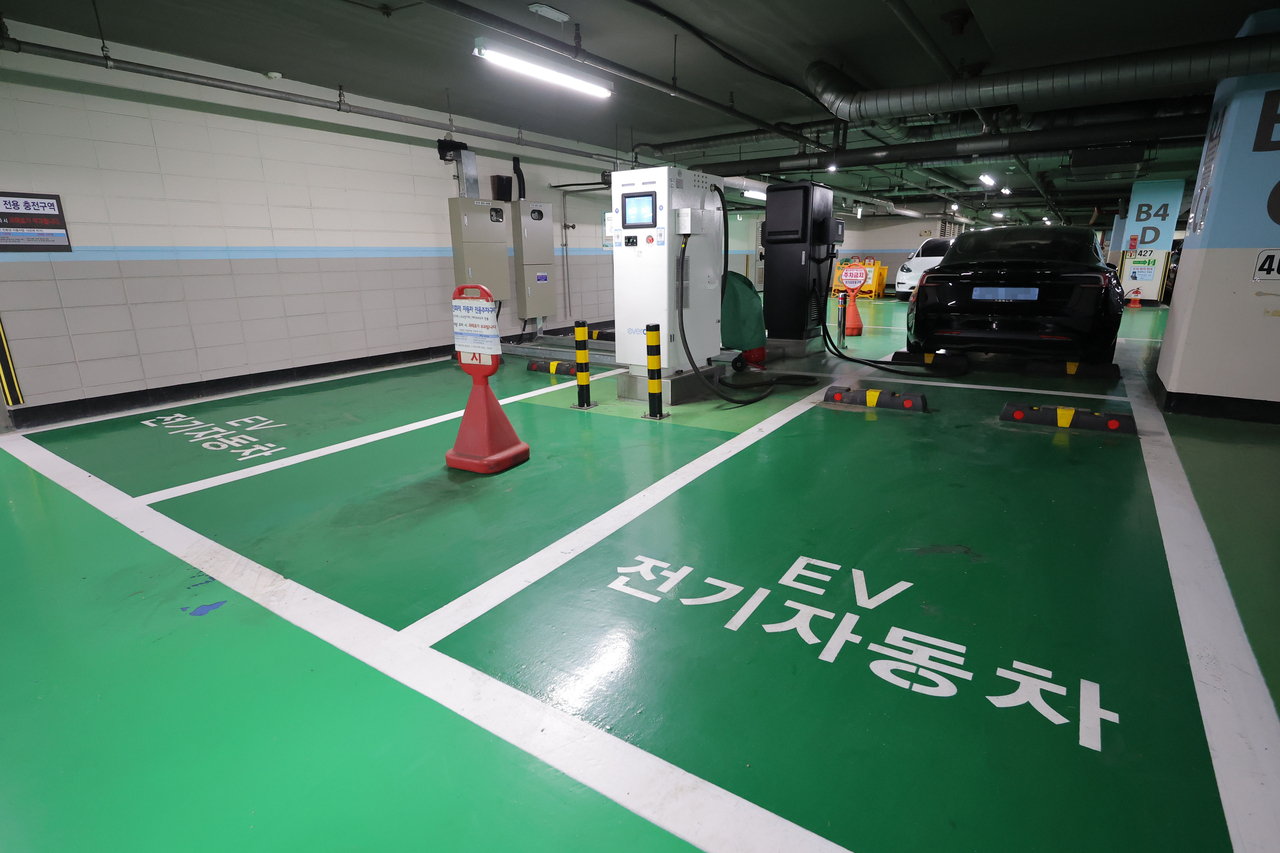
Among the key recommendations is the introduction of a legal framework to separate EV battery ownership from the vehicles themselves. In Korea, EV batteries are currently treated as part of the vehicle and are effectively controlled by the automakers, even though battery suppliers manufacture them.
FKI argues that recognizing batteries as independent assets would allow consumers to purchase EVs at lower costs by excluding the battery price, while enabling rapid battery swapping through dedicated stations.
Such models — where independent operators own and manage batteries and users pay subscription or rental fees — have already gained traction in countries such as China and India.
An industry source noted that while a Battery-as-a-Service model could benefit consumers, it would face significant hurdles as it shifts the balance of power from automakers to battery manufacturers.
“With automakers pushing to internalize battery development — which accounts for up to 40 percent of an EV’s cost — handing over ownership to battery cell makers would mean giving up control over one of the most strategic vehicle components,” the source said.
Meanwhile, FKI also called for a legal safe harbor clause to allow the use of copyrighted materials for AI training, with appropriate safeguards for personal data, noting that obtaining individual permissions is impractical. It cited Japan as a model, where such use is broadly permitted for AI development, as long as it does not involve directly using the content.
It also proposed allowing robotic parking systems in apartment complexes, which are currently banned as they are classified as mechanical parking facilities, and suggested expanding insurers’ MyData “bundled data” services to include family relationship certificates.
Lee Sang-ho, head of FKI’s economic policy division, urged bold reform of “outdated regulations,” adding that the recently upgraded Regulatory Rationalization Committee could help drive meaningful changes.
By Byun Hye-jin (hyejin2@heraldcorp.com)