
Chipmaker posts record earnings as customers rush for long-term supply deals
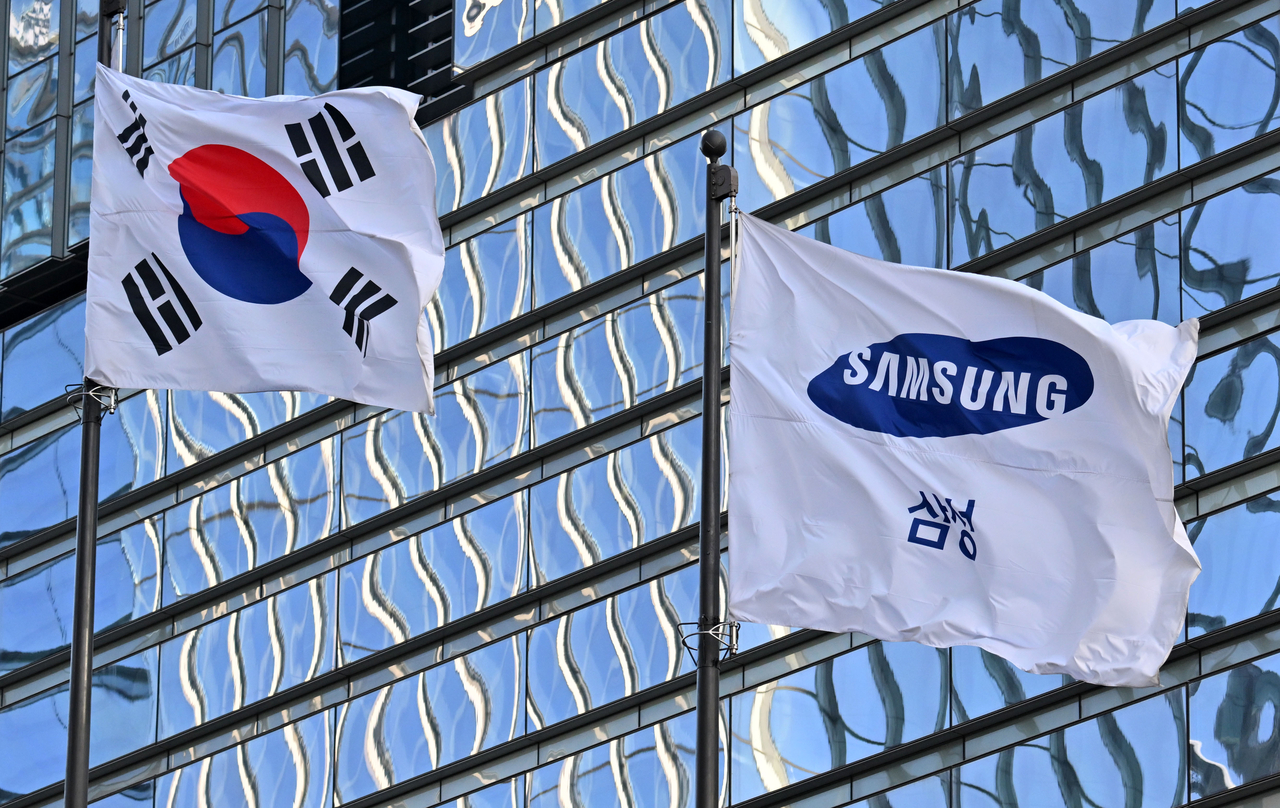
Samsung Electronics is accelerating its US chip expansion, bringing its first Taylor, Texas, foundry online this year and starting construction of a second fab by year-end as soaring AI demand strains advanced-chip capacity.
Announcing record quarterly earnings Thursday, the chipmaker warned that the memory shortage is likely to worsen next year as leading-edge foundry capacity struggles to keep pace with surging demand, prompting it to accelerate expansion at its fab in Taylor.
The company also ruled out a Nasdaq ADR listing for now, citing its strong cash-generating capacity across a diversified business portfolio and limited need to raise additional funds.
“AI-driven memory demand is expanding at an unprecedented pace, while available industry supply continues to fall short of customer needs,” Samsung said during the earnings call.
“Given the more than 3 1/2 year lead time from new fab construction to wafer production, a meaningful increase in supply will take time, and we expect the shortage to intensify in 2027 and persist into 2028.”
During the April-June period, Samsung reported revenue of 171.5 trillion won ($119.2 billion), and operating profit of 89.5 trillion won. The figures were up 130 percent and 1,813.8 percent from a year earlier, respectively, both marking quarterly records.
Its semiconductor-focused Device Solutions division posted 127.5 trillion won in revenue and 89.2 trillion won in operating profit, up 357 percent and 88.8 percent on-year, respectively.
By contrast, the Device eXperience division, which oversees smartphones, TVs and home appliances, posted 48 trillion won in revenue and an 800 billion won operating loss as higher component costs weighed on the mobile business despite solid Galaxy S26 and A-series sales.
Harman posted 4.6 trillion won in revenue and 400 billion won in operating profit, while Samsung Display recorded 7.5 trillion won in revenue and 700 billion won in operating profit.
Against the backdrop of tightening supply, requests for long-term supply agreements are surging as customers seek to secure memory capacity, Samsung said.
“Requests for multiyear supply agreements continue to grow as AI token consumption rises exponentially,” the company said. “We are negotiating primarily with customers that can provide clear visibility into future demand, which we believe will help make the memory business less vulnerable to traditional supply-demand cycles.”
The company said it has completed long-term supply agreements with five major global data center customers and is in final-stage talks with five additional large customers tied to AI demand.
The contracts are structured on a rolling basis, with an initial five-year term followed by annual renewals. Samsung said it has already received about a quarter of the agreed upfront payments.
Once the additional deals are completed, long-term contracts are expected to cover 60 to 70 percent of Samsung’s medium- to long-term production plans.
For the second half, Samsung forecast chip earnings to improve further as it ramps up HBM4 shipments. Third-quarter HBM4 revenue is projected to more than triple from the previous quarter, with the product expected to account for well over 60 percent of total HBM revenue in the second half.
The company aims to lift its HBM market share to a level comparable with its share of the broader DRAM market.
In its foundry business, Samsung plans to begin operations of Taylor Fab 1 in Texas this year, followed by a gradual ramp-up of 2-nanometer capacity. Construction of Taylor Fab 2 will start by year-end ahead of mass production in 2030.
Samsung is also considering additional capacity as customer inquiries increase for its 1.4-nanometer process. Further investment will depend on orders and customer negotiations.
Separately, Samsung said it is not currently considering a US listing through American depositary receipts, citing its strong cash generation and limited need to raise fresh capital.
The company said an ADR listing could broaden its global investor base but would also bring additional disclosure, regulatory and operational burdens. It nevertheless left open the possibility of revisiting the option as part of longer-term efforts to enhance shareholder value.
Seeing robotics as a key growth area, Samsung recently elevated the business directly under the CEO, creating an RX Business Office to integrate strategy, hardware, AI software and product development. Former Boston Dynamics strategist Lee Dong-gun was appointed to lead strategy.
The company said it plans to build a robot pilot line and data factory in Gumi, initially targeting manufacturing and logistics before expanding into multipurpose humanoids and consumer applications. It is also considering overseas partnerships and acquisitions.
By Jo He-rim (herim@heraldcorp.com)