
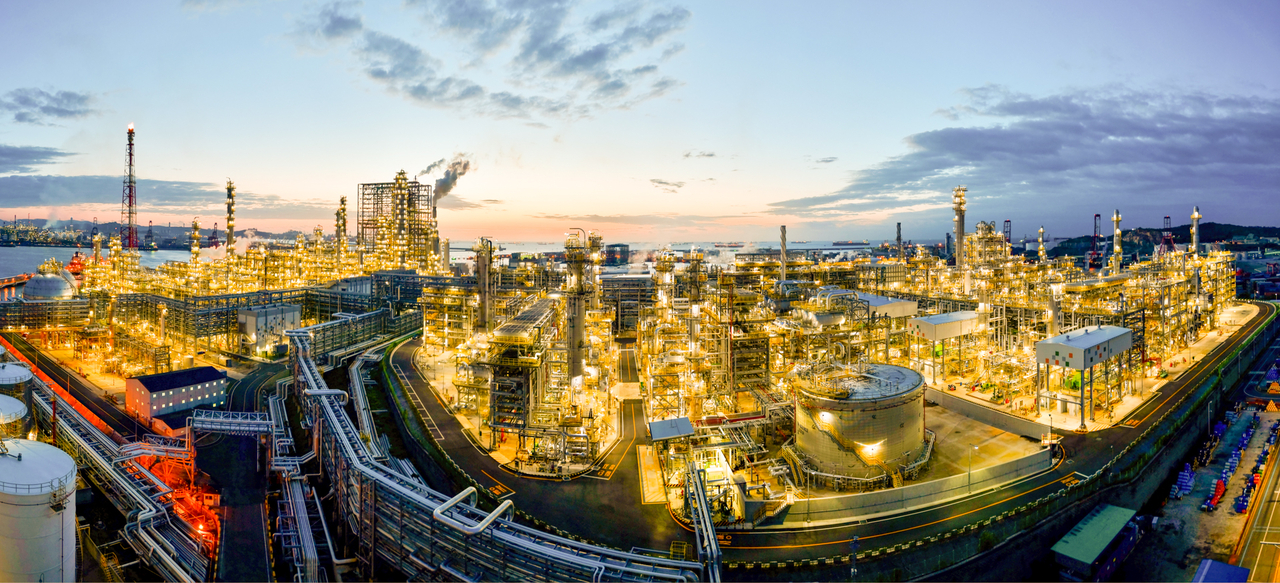
S-Oil is betting 9 trillion won ($6.4 billion) on its Shaheen Project to sharpen the cost, energy and supply-chain competitiveness of Korea’s struggling petrochemicals industry.
According to the company on Tuesday, the Shaheen Project marks the world’s first commercial deployment of thermal crude to chemicals technology, which converts crude oil and low-value refinery fractions directly into high-value petrochemical feedstocks.
The facility drastically improves raw material and energy utilization by integrating a high-efficiency steam cracker, power generation units, waste-heat recovery and advanced process optimization. It has also reduced carbon emissions by over 20 percent compared to the original design layout.
Another key advantage is feedstock flexibility — a feature increasingly becoming important as recent Middle East instability highlights the need for stable raw material supplies. S-Oil noted that its integrated production system allows for flexible responses to price volatility and supply disruptions, reinforcing its overall cost competitiveness and supply chain resilience.
Slated for commercial production next year with an annual production capacity projected up to 3.2 million tons, the new facility is in proximity to the company’s oil refining and petrochemical production plant in Onsan, within the Ulsan National Industrial Complex.
Ethylene, propylene and other basic chemicals produced by the Shaheen Project will be supplied directly to downstream manufacturers in the Ulsan complex through dedicated pipelines.
Local chemical companies turn basic chemicals into finished products such as plastics and resins. Getting these raw materials locally at lower, predictable prices provides a cost advantage, making it easier to compete on price in global markets.
The company also emphasized that replacing basic chemical imports with domestic production reinforces national raw material self-sufficiency and strengthens the domestic petrochemical value chain.
Cost competitiveness in basic petrochemicals is widely viewed as a key pillar for driving the domestic industry’s shift toward high-value products.
By converting crude directly into chemical feedstocks and integrating refining operations, these next-generation facilities lower raw material and energy costs while maximizing overall chemical output. This comes as global rivals in China and the Middle East aggressively expand megasized crude oil-to-chemicals projects.
“The Shaheen Project is a long-term investment in line with government initiatives to boost industrial competitiveness through advanced, high-efficiency facilities,” an S-Oil official said. “Through its successful completion and stable operation, we aim to contribute to securing sustainable global competitiveness for Korea’s petrochemical sector.”
The Shaheen Project represents the largest foreign direct investment in Korea. S-Oil approved the final investment decision in November 2022 and broke ground the following year. The project aims to build a world-scale steam cracker to double the company’s petrochemical output ratio.
The initiative aligns closely with the Korean government’s efforts to counter mounting cost pressures and global oversupply.
Seoul has been encouraging chemical manufacturers to pivot from commodity products toward high-value, sustainable materials through business restructuring and high-efficiency facility upgrades. Through streamlined permitting, tax incentives and favorable investment conditions, the government promotes low-carbon, high-efficiency technologies — including thermal crude to chemicals and high-efficiency crackers — to ensure long-term competitiveness.
By Byun Hye-jin (hyejin2@heraldcorp.com)