
Lee Hyung-il faces full plate of inflation, housing, market reform and slowing growth
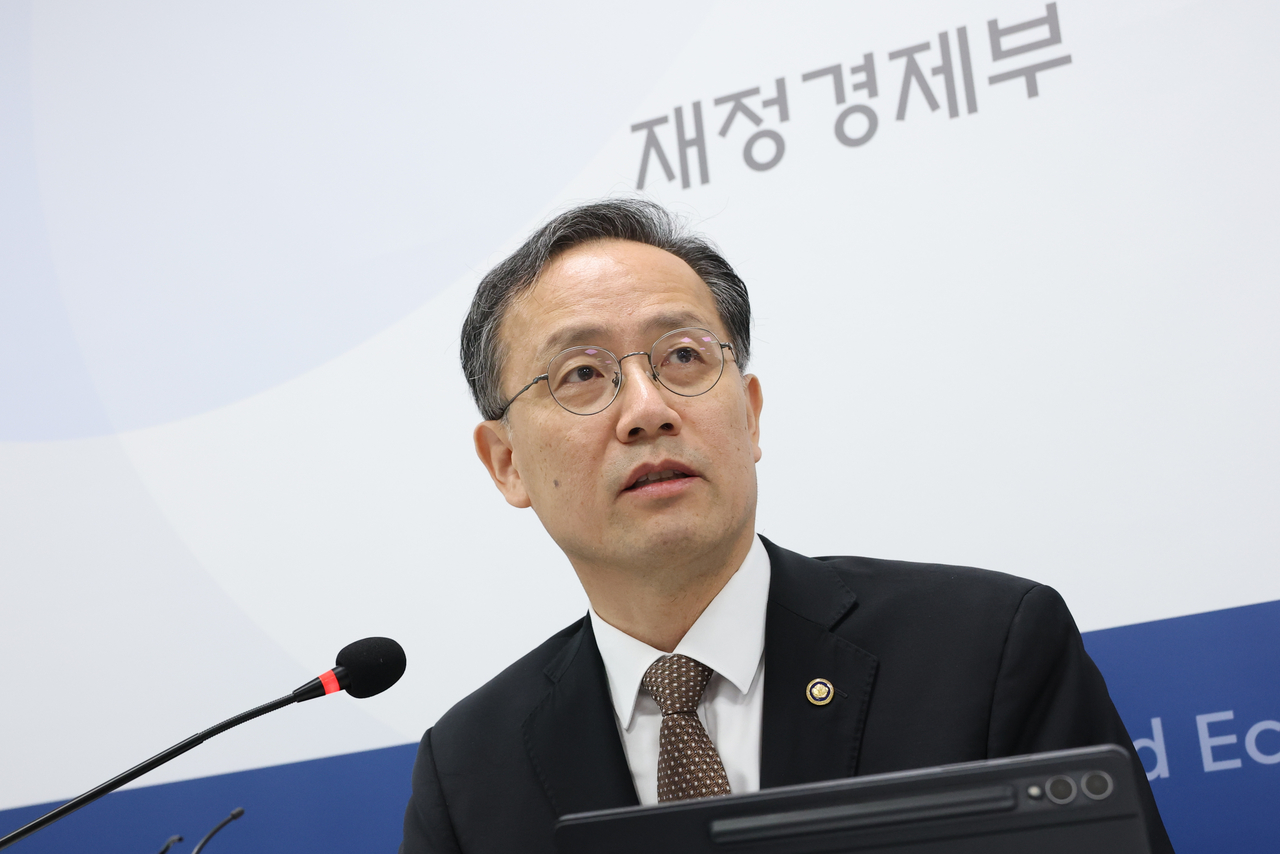
Finance Minister nominee Lee Hyung-il on Wednesday laid out a growth-focused policy agenda that also emphasizes capital market reform and stronger economic policy coordination.
Lee, currently first vice finance minister, met with reporters in Sejong for the first time since his ministerial nomination Sunday. At the briefing, he identified lifting Korea's potential growth rate and reducing polarization as his two top economic priorities.
"We need to accelerate the economy's growth momentum and firmly establish a rebound in the potential growth rate," Lee said. "We will swiftly push forward three major national projects to generate major investment and new growth engines, foster regions as new growth hubs and expand preemptive investment in future advanced technologies."
Lee repeatedly put inflation at the top of the list, calling price stability "the foundation of the people's livelihood and the starting point for reducing polarization." With the Chuseok holiday approaching, he said the government would seek additional steps, including more supply of key goods and discounts.
Housing is another near-term challenge after the government revised parts of its tax package following public criticism. Lee said the shift toward a market centered on owner-occupiers would remain, while reasonable changes could still be accepted during National Assembly deliberations.
With housing, he placed greater emphasis on expanding supply.
"The most basic and important thing for stabilizing the housing market is to increase housing supply," Lee said. "I think that is the most fundamental answer." He added that tax or financial support could be used if it helped expand supply.
On Korea's stock market discount, Lee argued that tax changes alone would not eliminate incentives for controlling shareholders to keep valuations low ahead of succession.
"Ultimately, for this issue to be resolved, the development of the capital market has to come first," he said.
Lee pointed to corporate governance reform and proposals to institutionalize "bear hug" takeover bids, which could expose deeply undervalued companies to greater M&A pressure. The aim is to strengthen market discipline and give companies more incentive to raise shareholder value.
The nominee also signaled that he would seek to strengthen the Finance Ministry's role as the government's economic policy coordinator, extending its focus beyond areas where it has direct authority, such as tax, treasury and foreign exchange policy.
"The role of the deputy prime minister is to exercise leadership in major economic decisions," Lee said. "There are limits to relying only on the ministry's own policy tools."
He said the ministry would need to work across government to resolve major economic issues. Lee also plans to strengthen the coordinating role of economic ministers' meetings and create a smaller forum bringing together relevant ministers and the presidential office to resolve contentious issues more quickly.
President Lee Jae Myung nominated Lee Hyung-il on Sunday in a six-ministry reshuffle spanning finance, justice, defense, land, gender equality and small- and medium-sized enterprises. The presidential office described Lee Hyung-il as a seasoned policymaker with proven execution skills who could translate improving economic indicators into tangible gains for households and help narrow polarization.
He is set to succeed Koo Yun-cheol, the Lee administration's first finance chief, a veteran budget official who has led its expansionary fiscal drive and growth strategy since July 2025. Unlike Koo, whose career was largely built around budget and fiscal policy, Lee Hyung-il has spent much of his career in macroeconomic and financial policy.
Lee, 55, entered public service through the 1992 civil service examination and has held key roles in the ministry, such as economic policy director general, while also serving as presidential economic policy secretary. Before becoming vice minister in January, he also served as Statistics Korea commissioner.
Lee's appointment is expected to follow a National Assembly confirmation hearing in about two weeks.
By Choi Ji-won (jwc@heraldcorp.com)