
South Korea’s industry minister said Tuesday that a proposed Alaska liquefied natural gas project carried added strategic value for the country’s energy security, especially after the war in the Middle East, while reaffirming that any Korean participation would have to make economic sense.
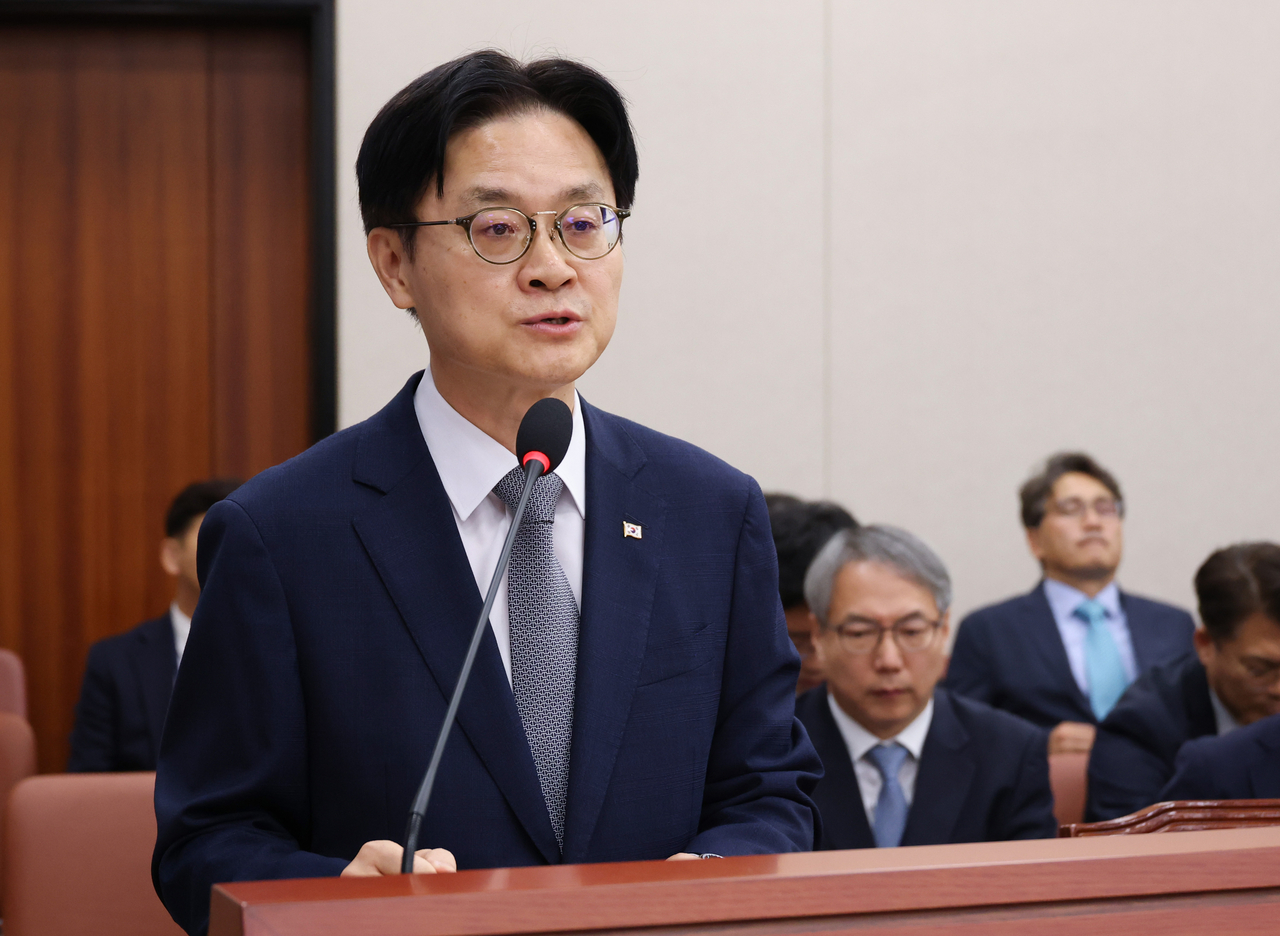
Industry Minister Kim Jung-kwan made the remarks during a parliamentary audit of the Ministry of Trade, Industry and Resources, responding to a question from Rep. Choi Soo-jin of the ruling People Power Party over Seoul’s potential involvement in the massive US energy project.
“It is true that the project had not moved forward in the past because its commercial viability was clearly low,” Kim said. “But following the war in the Middle East, it has clearly gained new strategic value.”
Kim pointed to growing uncertainty surrounding global LNG supply routes amid the conflict. South Korea has faced increasing challenges in securing LNG shipments from the Middle East, while some cargoes from the US Gulf Coast have had to take longer routes around the Cape of Good Hope rather than via the Panama Canal.
“If the Alaska LNG project is successfully developed and South Korea can bring LNG supplies from it, it could provide strategic value,” he said.
But Kim stressed that the government has not changed its fundamental standard for evaluating the project.
“We have repeatedly said that any review is contingent on commercial viability,” he said.
His remarks come amid a continuing discrepancy between Washington and Seoul over the project. US President Donald Trump has announced that South Korea agreed to invest over $50 billion in the Alaska LNG project, while Seoul maintains that no final decision has been made and that its participation depends on commercial viability and compliance with domestic legal requirements.
The Alaska LNG project is designed to transport natural gas produced on Alaska’s North Slope through an approximately 1,300-kilometer pipeline to Nikiski on Alaska's southern coast, where the gas would be liquefied and shipped to markets such as Asia. Its huge construction cost and competition from other LNG suppliers have long cast doubt on its economics.
The Alaska LNG project is among the projects Washington has identified under Seoul's broader $350 billion US investment commitment tied to the bilateral trade agreement clinched last year.
Earlier in the audit, Kim said the government would put the national interest first as it follows through on US investment projects jointly announced by Seoul and Washington.
“We will carry out the follow-up procedures without disruption, with the national interest as our top priority, and turn them into opportunities to expand Korean companies’ presence in the US market and provide a foothold for their expansion into global markets,” he said.
By Ahn Sung-mi (sahn@heraldcorp.com)