
Fourth straight success demonstrates precision deployment; 9 of 10 secondary CubeSats also released
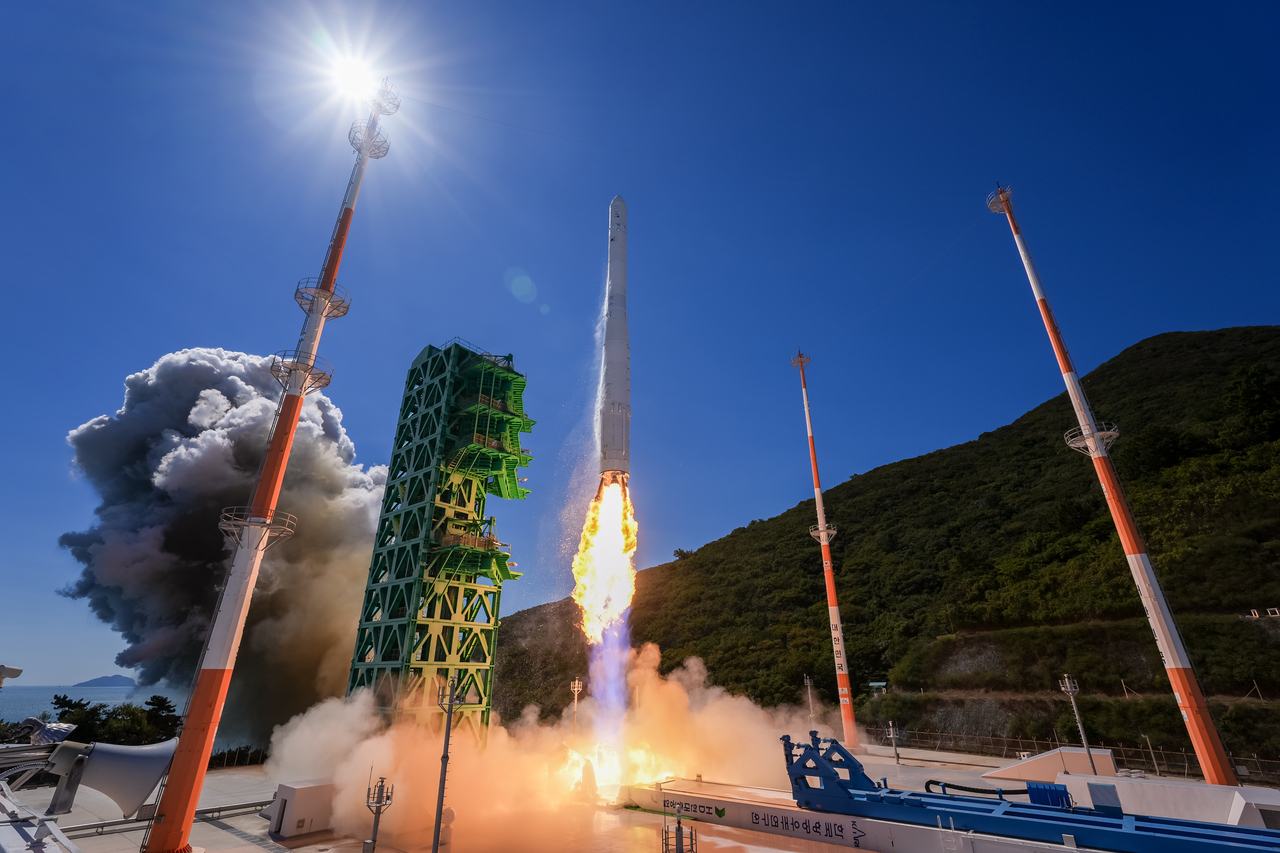
South Korea’s Nuri rocket delivered five primary satellites into orbit Wednesday, completing its most complex deployment yet and taking another step toward commercial launch services.
The fifth flight marked Nuri’s fourth consecutive success and its first mission to release five primary satellites in sequence. Nine of its 10 secondary CubeSat payloads also separated successfully, while one remained aboard.
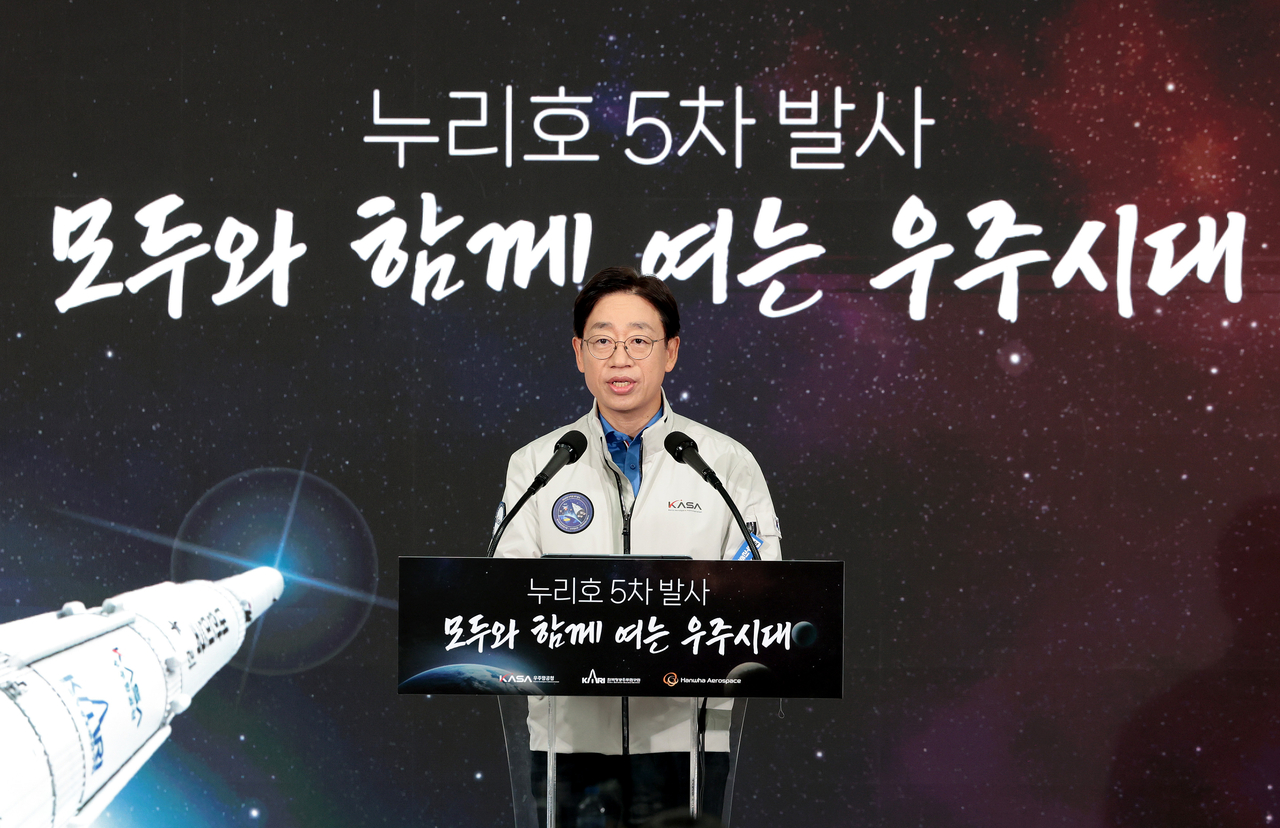
Korea AeroSpace Administration Administrator Oh Tae-seog confirmed the result at a 2 p.m. briefing at the Naro Space Center in Goheung, Jeonnam-Gwangju, after reviewing flight and deployment data.
The mission tested Nuri’s ability to release multiple satellites precisely enough to keep them safely apart — a capability needed to serve customers carrying several payloads on a single launch.
“The successful orbital insertion of the satellite constellation demonstrated that Nuri can carry out a broader range of missions by delivering payloads to the orbit and at the time requested by customers,” Oh said.
Nuri lifted off from the center’s second launch pad at 12:25 p.m., exactly as scheduled. It was the first of the program’s five launches to proceed without a delay or postponement.
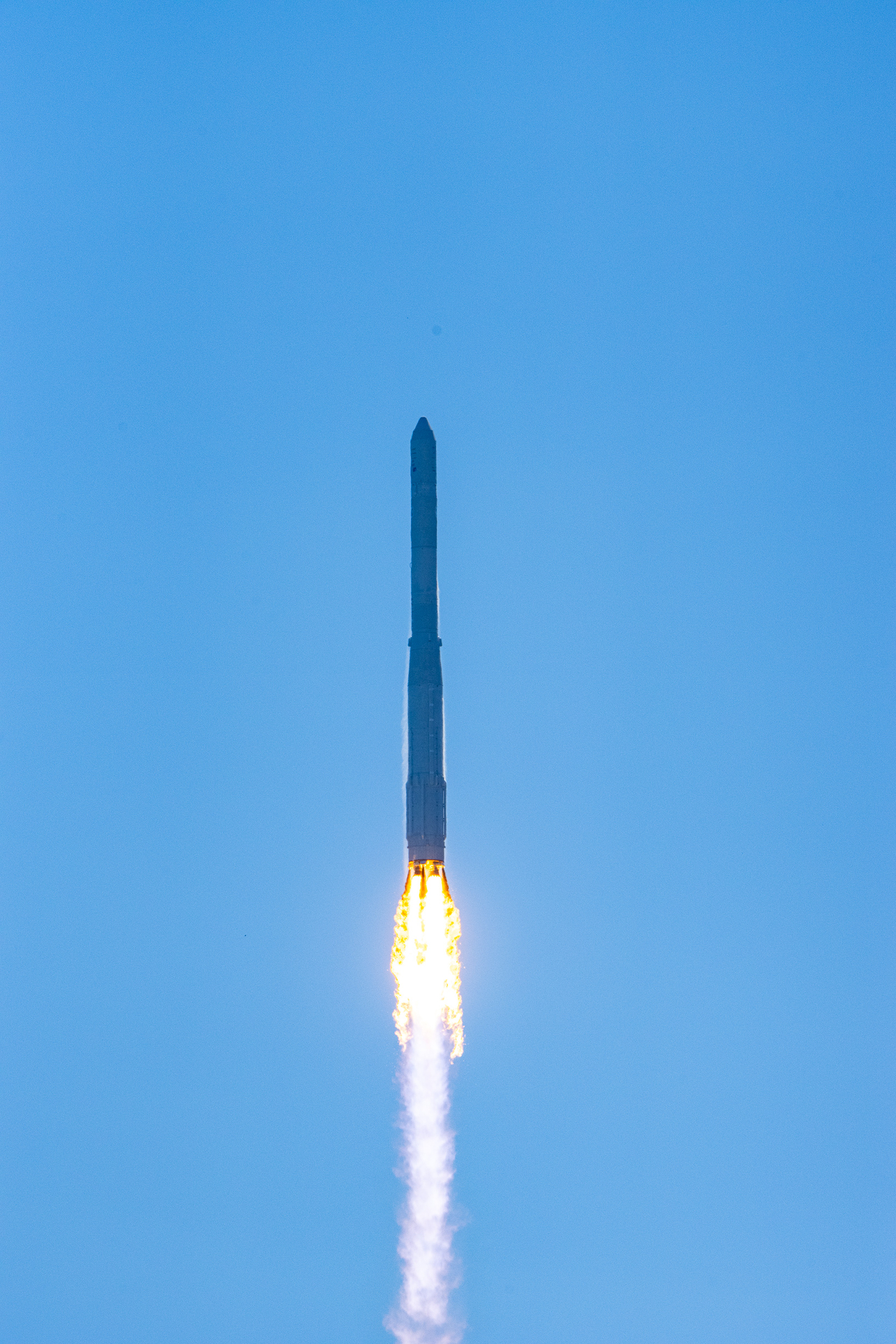
The 200-metric-ton, three-stage rocket shed its first stage 121 seconds into the flight at an altitude of about 66.5 kilometers. Its payload fairing separated at around 227 kilometers, followed by the second stage at about 275.7 kilometers.
After reaching 575.4 km and stabilizing its orientation, Nuri began releasing the five primary satellites roughly 13 minutes and 15 seconds after liftoff. All five were deployed within the target altitude range of 570 km, plus or minus 15 km.
The payloads — NEONSAT Nos. 2 through 6 — belong to Korea’s first domestically developed constellation of mass-produced Earth observation microsatellites. Each weighs less than 100 kilograms and is designed to provide frequent imagery of the Korean Peninsula and surrounding waters for disaster response and national security.
NEONSAT-6 made its first contact with Korea’s King Sejong Station in Antarctica at 1:08 p.m., according to KASA. Initial contact with the other four satellites was expected by around 4:30 p.m. through ground stations in Daejeon, Jeju Island, Antarctica and Svalbard, Norway.
The mission used a new low-shock separation system for the five main satellites, with staggered releases designed to prevent them from approaching one another after deployment.
One secondary payload, Quaternion’s PERSAT-02 CubeSat, failed to separate despite receiving the scheduled deployment signal, officials said. Authorities are investigating the cause. The failure did not alter their assessment that Nuri had completed its primary mission.
Nuri has now succeeded in four of its five flights. Its inaugural launch in 2021 failed to place a dummy payload into orbit after the third-stage engine shut down early.
Deputy Prime Minister and Science and ICT Minister Bae Kyung-hoon called Wednesday’s flight “another milestone,” highlighting the use of a domestically developed rocket to carry Korean-built satellites into space.
The five primary satellites form part of a planned 10-satellite constellation. Another five are scheduled to launch aboard Nuri’s sixth flight in the second half of 2027.
Once complete, the constellation is expected to image the Korean Peninsula more than three times a day and revisit the same area within 24 hours, reducing the wait for imagery during disasters and other emergencies.
The government plans to launch Nuri at least annually through 2032 to build its flight record and gradually transition to a privately led commercial launch service.
Rep. Song Ki-hun, chair of the National Assembly’s Science, ICT, Broadcasting and Communications Committee, pledged legislative and budgetary support to help turn the successful mission into further growth for Korea’s space industry.
By Jie Ye-eun (yeeun@heraldcorp.com)