

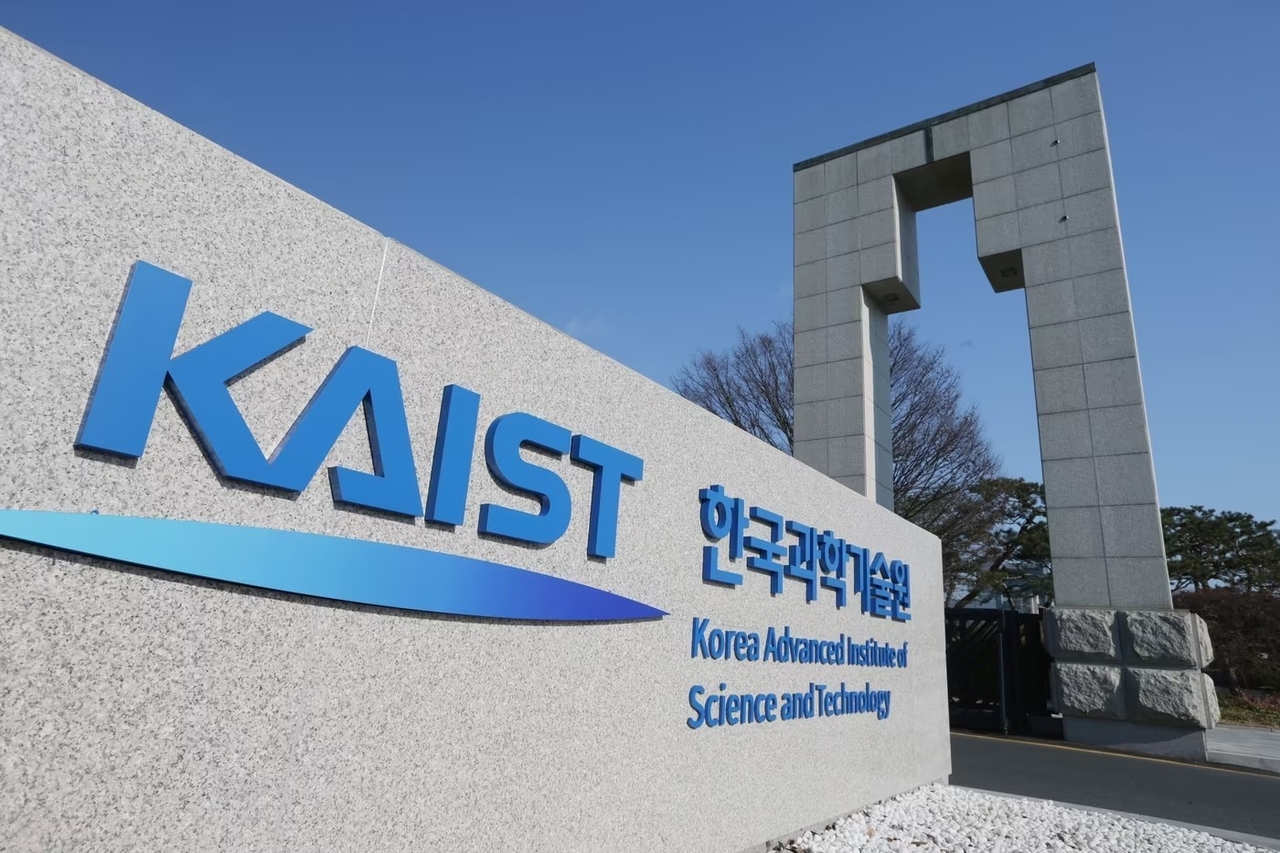
South Korea's KAIST, the country's leading science and technology university, said the compression technology behind Google's TurboQuant will strengthen memory semiconductor demand rather than weaken it, pushing back against the investor fears that drove chip stocks lower this week.
The university's assessment carries unusual weight as KAIST electrical engineering professor Han In-su co-developed two of TurboQuant's three underlying algorithms and remains a visiting researcher at Google.
Google introduced TurboQuant on Tuesday, describing a compression method that can reduce the working memory AI models need during inference, when a trained model processes queries and generates output, by up to sixfold without meaningful accuracy loss.
Memory chip stocks fell sharply in the days that followed, with Samsung Electronics and SK hynix, the world's two largest memory chipmakers, both declining as investors worried the breakthrough would dampen demand for DRAM and high-bandwidth memory.
In a press release on Friday, KAIST said the technology marks a shift from high-capacity to high-efficiency computing that would make AI cheaper and more accessible, "driving both qualitative advancement and quantitative expansion of memory demand at the same time." While reduced memory requirements per model may appear to slow demand in the short term, the university said a lower threshold would dramatically widen the range of AI applications, from on-device AI in smartphones and appliances to large-scale data centers, ultimately creating new demand at a larger scale.
"The rapid growth of memory consumption as models become more powerful has long been cited as the biggest constraint," professor Han said. "This research presents a new direction for effectively reducing that bottleneck while maintaining accuracy."
Han co-developed QJL, a technique that compresses data to a single bit per data point while preserving the mathematical relationships AI models depend on, and PolarQuant, a compression method to be presented at the AISTATS 2026 conference in May. Both serve as core building blocks of TurboQuant.
By Moon Joon-hyun (mjh@heraldcorp.com)