
Dispute over incentivized searches expands into POS integration as platforms compete for merchant data, services
Naver and Toss have opened disputes on two fronts, with Naver seeking a police investigation into Toss’ reward-based search campaigns and Toss preparing an antitrust complaint over access to Naver’s merchant platform, according to industry sources Wednesday.
What began as a disagreement over whether Toss was distorting Naver search results has spread to the offline payments market. At stake is access to the data and services that connect consumers with restaurants, shops and other local businesses.
Why Naver objects to Toss search rewards
The initial dispute centers on an “attendance check” feature in the Toss app. Through the feature, users receive points for completing missions, some of which require them to search Naver for designated information — such as a restaurant menu or product details — and submit the result through Toss.
Naver argues that such incentives generate searches that do not reflect users’ genuine interests. If enough people search for the same keywords or businesses to earn rewards, the company says, the activity could distort the signals its algorithms use to assess search interest and rank results.
In July, Naver sent notices to Toss and other companies asking them to stop marketing campaigns that reward users for searching designated terms.
Naver later asked the Gyeonggi Nambu Provincial Police Agency to investigate Viva Republica, the operator of Toss, on suspicion of business interference and violations of laws governing information networks.
“We requested the investigation because the issue of search result distortion caused by incentivized marketing has not been resolved,” a Naver official said.
Toss rejected the allegation and asked Naver to provide objective evidence that its campaigns distorted search results. The companies have exchanged several rounds of correspondence, but failed to resolve the disagreement.
Why Toss may take Naver to FTC
The conflict subsequently spread to point-of-sale systems, which merchants use to process transactions and manage store data.
Toss Place, Toss’ POS business, is considering filing a complaint with the Fair Trade Commission over Naver’s failure to integrate Toss POS with Place Plus.
Place Plus links information from participating POS providers to Naver’s local business platform. The connection allows merchants to automatically provide store information, menus and operating data through Naver services, reducing the need to update the information separately.
For a POS provider, integration can make its system more attractive to merchants because Naver is one of Korea’s main channels for discovering local businesses.
Toss argues that Naver has connected Place Plus with 15 other POS providers, including OKPOS and Payhere, while denying Toss POS the same access.
“We are asking Naver to disclose the criteria applied to the 15 POS providers and apply the same standards to Toss POS,” a Toss official said. “We have completed preparations for a possible FTC complaint.”
Naver denies unfairly excluding Toss, saying it is adding POS partners in stages under standards applied to all providers.
“Place Plus integration is being expanded sequentially based on objective criteria applicable to all POS providers,” a Naver official said.
The official, however, linked further cooperation to the search dispute, saying broader discussions would be difficult unless activities that had continued to disrupt Naver’s services were addressed.
What companies are competing for
The clash reflects growing competition between the two companies for relationships with Korea’s merchants.
Naver reaches businesses through search, local listings, advertising and Naver Pay. Toss, which began with mobile financial services, has expanded into merchant payments and POS systems through Toss Place.
Although online commerce continues to grow, in-person transactions still account for a large share of spending in Korea. Average daily face-to-face payments totaled 17.86 trillion won last year, compared with 12.87 trillion won ($9.42 billion) for non-face-to-face transactions, according to the Bank of Korea.
POS systems are particularly valuable because they can provide data on sales, popular products and peak business hours. Companies can use such information to offer merchants management tools, targeted advertising, payment services and financial products.
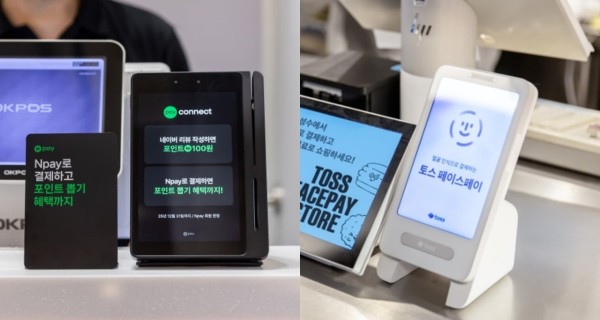
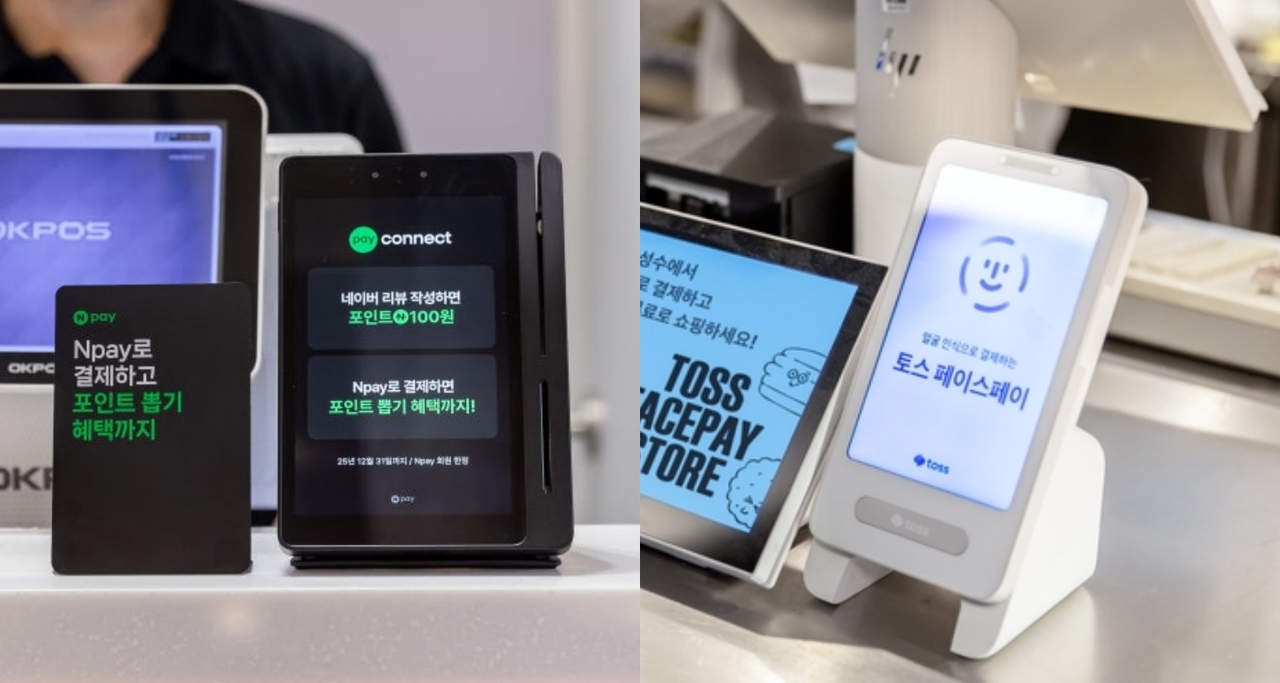
Both Naver and Toss have therefore been building infrastructure that brings them closer to offline businesses. Toss introduced its Toss Front payment terminal in 2023, while Naver Pay launched its Connect merchant device last year.
Toss Place had secured more than 400,000 merchants as of August. Naver Pay has also been broadening its merchant network and related services, making access to each company’s platform increasingly important — and contentious.
By Jie Ye-eun (yeeun@heraldcorp.com)