
New framework lets approved foreign institutions settle won transactions for overseas customers without separate Korean accounts
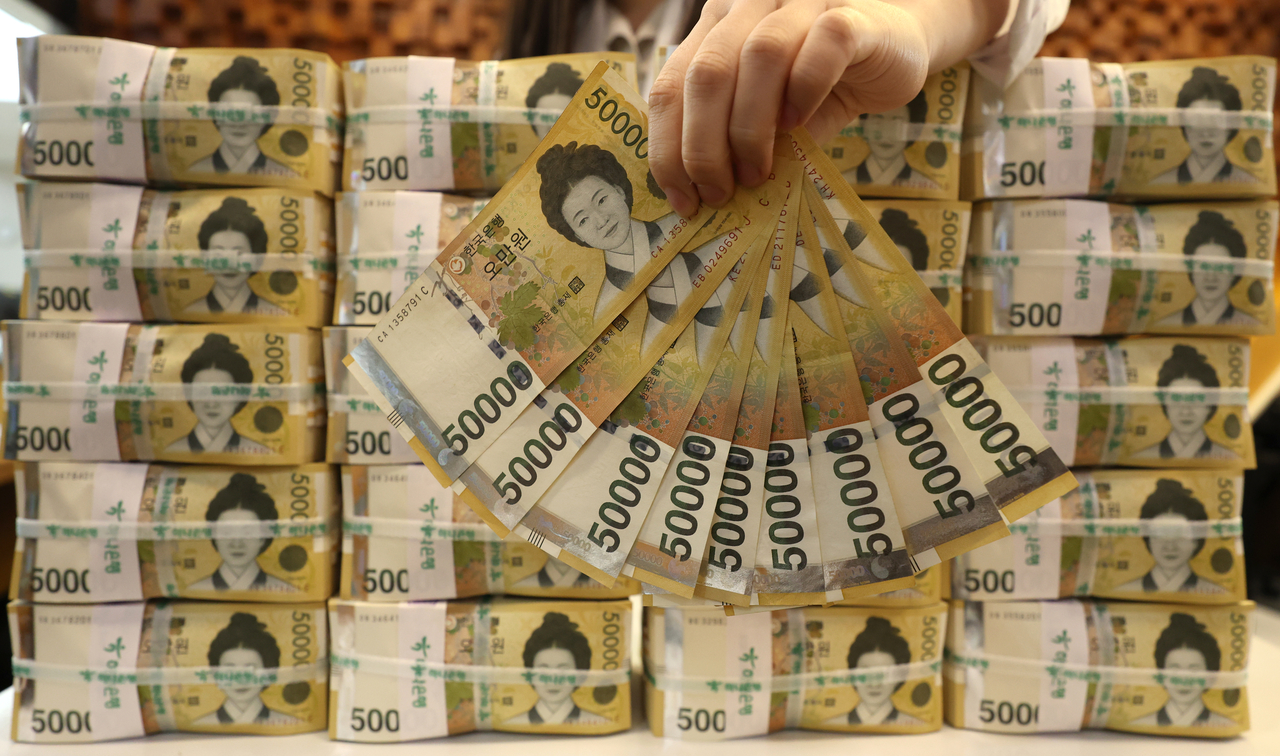
South Korea has allowed foreign financial institutions to settle won payments directly overseas, marking a step toward making the currency more widely used on a global scale, the Finance Ministry said Wednesday.
How offshore won settlement will work
Under the new framework, existing registered foreign institutions will be able to obtain an additional license as Registered Foreign Institutions for KRW Business, or RFI-Ks for short.
With the license, foreign financial institutions will be able to open omnibus accounts with domestic banks that handle foreign exchange and settle won transactions directly through the Bank of Korea's won international payment network, allowing nonresident foreign customers overseas to settle won-denominated transactions.
RFI-Ks will be allowed to handle remittances, investments and securities lending and borrowing. They will also be able to make and receive won payments and hold and manage won deposits and other funds.
RFI-Ks will be required to verify that their customers are nonresidents and submit monthly reports on their transactions to the authorities. The authorities may also restrict how RFI-Ks raise and use won-denominated funds, as well as the scope of their assets and liabilities, if deemed necessary.
What changes for overseas customers
The change is part of a broader road map to internationalize the Korean won, as announced by the government in July.
Previously, foreign customers were required to open separate accounts with foreign exchange banks in Korea to use the system, creating an additional hurdle for handling won transactions offshore.
Under the new system, however, they will be able to conduct won transactions directly through their existing won accounts at offshore won payment institutions, without having to open additional accounts in Korea.
For example, an individual in the US will be able to open a won-denominated account with a local bank and hold won to fund investments in Korean equities or bonds. Foreign exporters will also be able to pay Korean counterparts in won held in an account with a bank in their countries.
Why Korea wants won to go global
Amid long-standing restrictions on offshore won transactions, the local currency has held a relatively limited presence in the global forex market.
According to the Bank for International Settlements, it accounted for just 1.8 percent of global forex turnover as of the end of last year, compared with 89.1 percent for the US dollar, 28.5 percent for the euro, 16.9 percent for the Japanese yen, 10.2 percent for the British pound and 8.6 percent for the Chinese yuan.
Against this backdrop, the Korean government has moved to lift restrictions on offshore won transactions as part of its efforts to make the currency more widely used globally.
As part of the move, won-dollar trading was extended to 24 hours in July, from the previous 9 a.m.-to-2 a.m. session.
The shifts also partly come from the aim to secure an upgrade from the status of emerging market to developed market by the Morgan Stanley Capital International index.
The global index provider has long cited the won's limited offshore convertibility as one of the main obstacles to a reclassification.
By extending won-dollar trading to a wider public, Korean authorities hope to address one of the most persistent concerns raised by foreign investors.
"It is true that Korea's forex policy has been relatively closed in many respects. The direction now is toward greater accessibility," an official from the local forex authorities said.
By Im Eun-byel (silverstar@heraldcorp.com)