
1,400 per dollar back in sight, but analysts see limited further slide
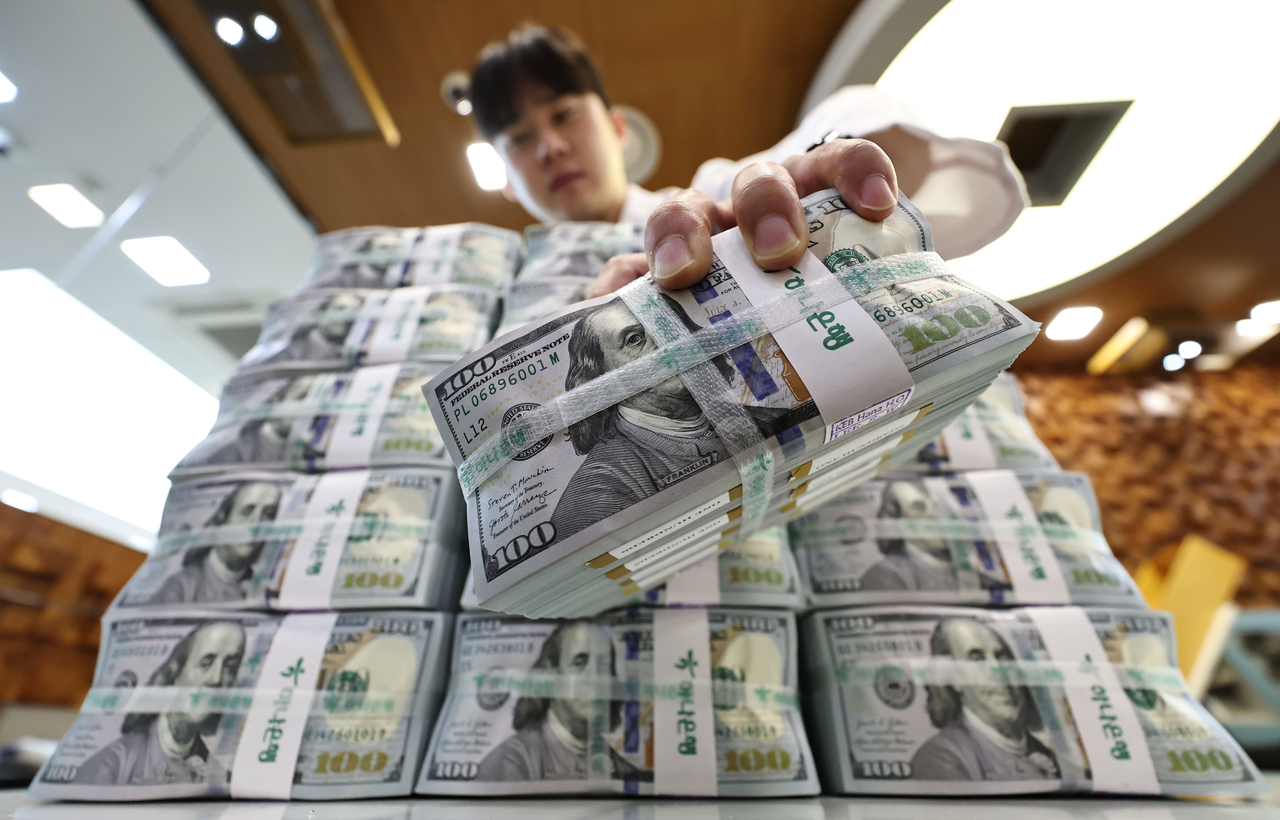
The Korean won's brief advance into the 1,330s has quickly unwound, with the currency weakening past 1,388 per dollar Monday, losing nearly 50 won to the dollar in less than two weeks as renewed US tightening concerns and foreign stock selling have brought the 1,400 level back into view.
Analysts see room for the won to weaken back above 1,400, but say such a move would not by itself signal renewed instability, with Korea's current account surplus and exporter dollar selling providing a buffer against a more pronounced slide.
Fed tightening, foreign outflows add pressure
As of 2:30 p.m., the won was trading around 1,385 per dollar, having strengthened to 1,336.1 on Sept. 9, before swiftly giving back those gains.
A key driver of the reversal has been the Fed's renewed tightening. The US central bank raised its benchmark rate by 25 basis points last week and signaled that further hikes remain possible, lifting Treasury yields and the dollar.
"The exchange rate is expected to face upward pressure from dollar strength following the Fed's rate hike and risk-off sentiment," said Woori Bank FX economist Min Kyung-won.
The Fed's move has coincided with a broader shift in foreign exchange supply-demand conditions that had strongly favored the won in July and August.
Moon Jung-hee, an FX researcher at KB Kookmin Bank, said the earlier rally reflected a softer dollar coinciding with large current account and trade surpluses, reduced foreign stock selling and relatively contained overseas investment outflows by Korean investors.
"What is clear is that onshore foreign-exchange supply and demand improved in July and August," Moon said.
One notable source of dollar supply was proceeds from SK hynix's American depositary receipt program. Mirae Asset Securities cited Bank of Korea's minutes noting that Korea's foreign-currency flows would have been in net outflow if ADR-related inflows were excluded.
With those favorable flows fading, Moon said the direction of the won will increasingly depend on whether foreign investors continue selling Korean stocks and how aggressively Korean investors keep buying overseas assets, both of which generate fresh demand for dollars.
"From here, the key is how much more foreign investors sell Korean stocks and how much domestic investors invest in US equities," Moon said, adding that those flows remain difficult to predict.
Moon sees the dollar-won rate trading around 1,380, within a broad range of roughly 1,340 to 1,420 over the next three months.
Oil, chips set the next range
Oil remains a key risk for energy-importing Korea, as higher prices increase importers' dollar demand and could also keep US inflation elevated, reinforcing pressure for tighter Fed policy.
"If oil rises above $120 or semiconductor prices plunge enough to threaten Korea's current account surplus, the exchange rate could move back above 1,420," Moon said.
On the other side, strong semiconductor exports and exporter dollar selling could provide a buffer. Woori Bank's Min noted that Korea's large current account surplus has offset much of the underlying foreign-currency outflow, while continued dollar selling by semiconductor companies could moderate further gains in the exchange rate.
Moon also cautioned against treating a return to 1,400 itself as a sign of renewed instability, saying the current range is more consistent with fundamentals than levels above 1,500 seen earlier this year.
"If it goes to 1,500 won, then it becomes a more serious issue. But at the current level, the impact on the economy, inflation and interest rates should be limited," he said.
By Choi Ji-won (jwc@heraldcorp.com)