
CJ targets 1.5 trillion won in annual sales by 2028, betting on US growth & new products
JINCHEON, North Chungcheong Province — For three decades, CJ CheilJedang has honed a seemingly simple recipe for instant rice under its Hetbahn brand, which more often than not stands in for microwavable rice itself in Korea.
The nation's first aseptic-packaged cooked rice, debuted in 1996, now holds about 65 percent of the domestic market and has grown into a lineup of multigrain bowls, pot-cooked rice, porridge, cup meals and even rice-studded gelato.
Innovation continues at CJ’s smart factory in Jincheon, North Chungcheong Province, where the company keeps pace with evolving palates at home and an overseas customer base that now accounts for a rising share of sales.
Innovation in a bowl

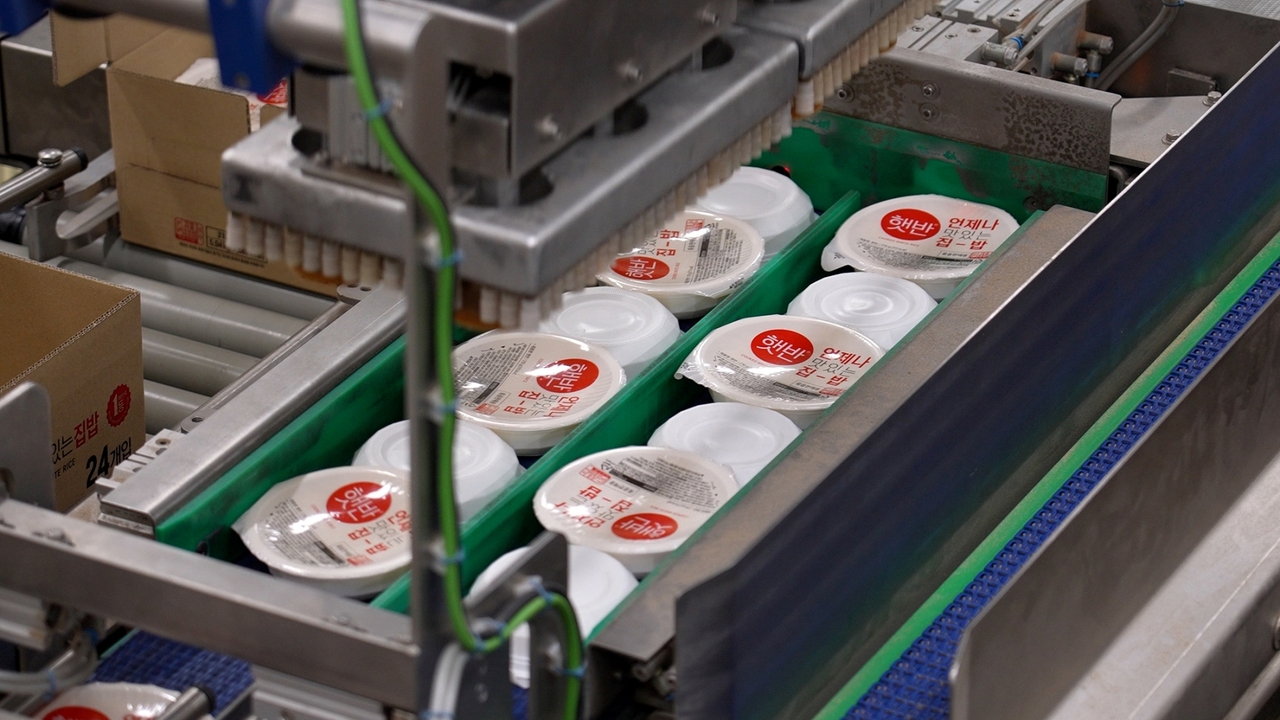
CJ Blossom Campus in Jincheon is Korea’s largest processed food plant, where automation runs through most of the Hetbahn operation, from manufacturing and packaging to warehousing and underground rail transport.
One of Hetbahn’s two plants in Korea, the campus turns out about 280 million bowls a year on six lines. The Busan plant lifts annual output to about 700 million.
At the heart of both plants sits aseptic technology, which lets Hetbahn keep for nine months at room temperature without preservatives. CJ imported its original aseptic line from Japan in 1996 and has kept improving it on its own.
"We brought in the same line and the same equipment, but our know-how has refined it so much that you can hardly call it the same equipment our competitors use," Oh Ye-jin, food research and development master at CJ CheilJedang, said during a media briefing Wednesday. "This aseptic process remains a production technology rivals cannot match."
The company said Hetbahn now holds 267 patents, which carried it from white rice into multigrain, pot-cooked rice and sticky rice for global markets. Its pot-cooked line, for one, uses vacuum-pressure sterilization to seal in toppings, and optimized moisture and heat treatment to keep their texture.
Those patents run through a production chain that begins at harvest, when CJ researchers check moisture in freshly threshed grain nationwide. At the plant, each bowl starts with grain milled that morning.
"CJ is the only rice maker in Korea with its own milling system. To cook rice at its freshest point, we make same-day milling a rule," Oh said.
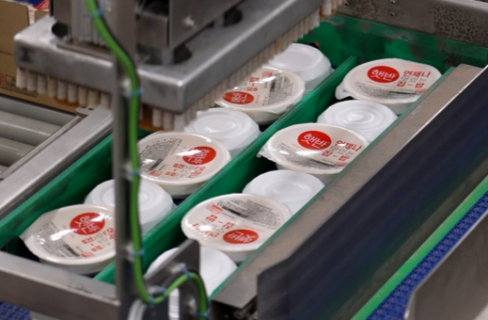
Production then follows eight steps: washing, soaking, filling, steam sterilization, adding water, cooking, clean-room sealing and inspection.
To block spoilage-causing microbes, CJ runs a clean room it likens to a semiconductor facility, with fewer than 100 dust particles per square foot against about 20,000 in ordinary air. Multilayer packaging then shuts out oxygen and withstands impact.
With freshness secured, the next frontier is what to make of the grain itself. Hetbahn’s research and development has expanded from grain blending into a nutrition design that adds protein and fiber and, through reconstituted rice, cuts carbohydrates and calories.
Next up for Hetbahn

CJ aims to lift Hetbahn’s annual sales to the 1.5 trillion won ($1.1 billion) range by 2028, up from a record of more than 1.1 trillion won last year.
Overseas markets, now spanning about 60 countries, will carry an increasing share of that growth. Sales abroad have grown an average of about 30 percent annually over the past five years, and their share of total sales rose from 8 percent in 2021 to 15 percent last year.
"By 2028, we expect it to exceed 20 percent and reach around 25 percent," Kim Jin, global chief marketing officer at CJ CheilJedang, said.
The US remains Hetbahn’s priority market. Sold there under the Bibigo label, it holds about 12 percent of the market, while leader Ben’s Original commands about 45 percent.
"We thought American consumers wouldn’t notice the taste of our rice, but they know it very well. They clearly recognize the difference between our aseptic-packaged rice and the pouch rice already sold in the US," Oh said.
Europe is next, while Southeast Asia, despite its rice culture, must wait until processed food takes deeper root.
CJ’s overseas drive coincides with shrinking rice consumption at home, especially among younger Koreans, and a slip in Hetbahn’s market share against cheaper rivals.
The company has answered with a broader lineup, from multigrain rice for health-conscious diners to trend-driven items such as matcha rice and perilla oil rice. CJ sees growing the category, not winning shares, as the leader’s job.
"Rice forms the foundation for taking Korean food global. Change the rice, and you can change how people live and eat," Kim said.
By No Kyung-min (minmin@heraldcorp.com)