
Automaker cuts planned Palisade production transfer from 200,000 to 74,000 units to protect domestic jobs
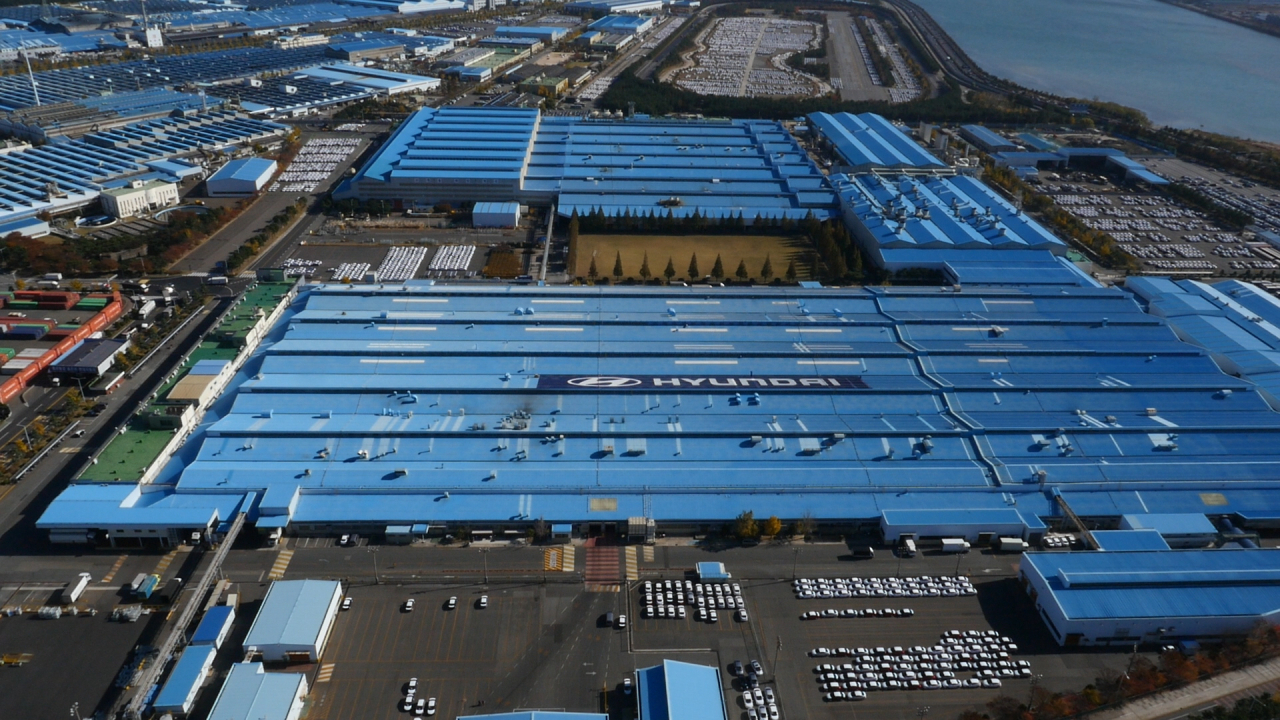
Hyundai Motor and its labor union agreed to reduce planned US production relocation to 74,000 units from its Ulsan plant to secure domestic employment, resolving monthslong negotiations over facility reconstruction.
According to media reports Monday, Hyundai’s management and its union signed an agreement outlined by the employment stability committee, mapping out volume transfer and workforce relocation tied to the reconstruction of Ulsan plant one and line two of plant four.
A primary focus of the deal is slashing the production shift of the Palisade Hybrid SUV by 63 percent from Hyundai’s initial proposal of 200,000 units. The automaker had planned to leverage its US facility to offset tariff costs and meet growing demand.
However, the union raised concerns about domestic factory utilization rates and job stability if the company transferred most Palisade production from South Korea to the US, retaining Ulsan plant four’s position as a primary manufacturing base for the Palisade.
Following the reconstruction, plant one will discontinue production of the current Kona subcompact SUV, with the next-generation model set for assembly in plants two and three. Plant three will begin manufacturing the domestic version in March, while plant two will produce the North American variant in August.
The Ioniq 5 electric SUV will move from plant one to line one of the new Ulsan electric vehicle plant — which was built on the site of the former proving ground within the existing Ulsan complex — by September next year.
The Extended-Range Electric Vehicle (EREV) version of the Genesis GV70 SUV, which was originally considered for North American production, will be manufactured at the Ulsan EV plant from March.
Hyundai’s latest EV hub, which begins mass production in late October, will initially feature the flagship Genesis GV90, followed by the Genesis GV70 EREV and the Ioniq 5, with line two set for full-scale operation by 2028.
Industry watchers say this vehicle reallocation is part of Hyundai’s strategy to leverage the Ulsan complex as the lead plant to develop and validate the latest eco-friendly vehicle technologies before global deployment.
In addition to the EV facility, Ulsan plant four will receive priority allocation for next-generation eco-friendly models, including hybrids.
Starting in January, Hyundai’s Asan plant will help produce export volumes of the Elantra sedan targeting North America, which are currently built at Ulsan plant three. However, production will return to Ulsan if its output drops below an agreed level.
“The Palisade is certainly a key model in North America, but at least both gas-powered and hybrid versions of the Tucson -- Hyundai’s US bestseller -- are built locally in Alabama,” said Kim Pil-su, an automotive engineering professor at Daelim University.
“Still, given frequent labor disruptions at domestic plants, Hyundai needs the flexibility to expand local US production for high-demand SUVs.”
By Byun Hye-jin (hyejin2@heraldcorp.com)