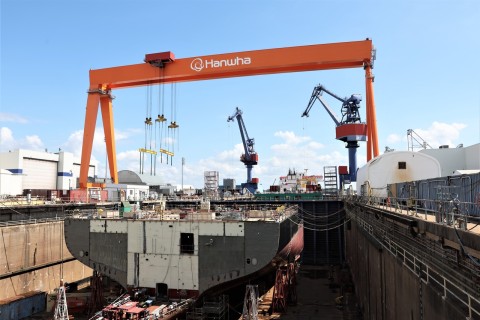

SK hynix's retreat highlights growing regulatory hurdles for overseas fundraising as Hyundai, Doosan and others pursue US listings
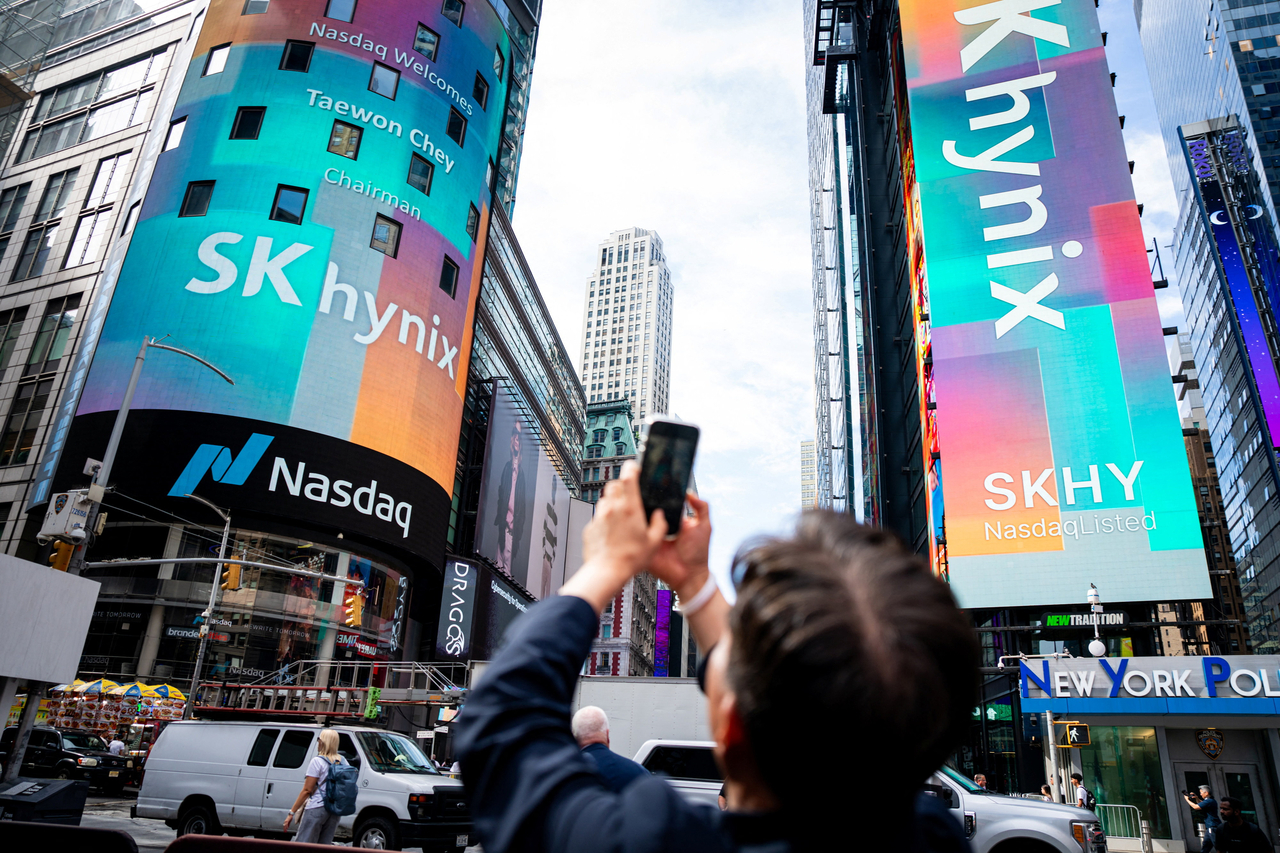
SK hynix's retreat from a planned US listing of Solidigm has sent a warning to Korean conglomerates eyeing Wall Street: Seoul's tougher scrutiny of duplicate listings could derail their global fundraising ambitions.
The chipmaker said Oct. 23 it had suspended plans to list its US flash memory subsidiary on the Nasdaq, shelving a potential blockbuster offering that could have valued Solidigm at up to $150 billion.
While SK hynix cited market conditions, the decision followed mounting shareholder opposition and regulatory scrutiny over concerns that a separate listing could undermine the value of shares held by investors in its Korean parent.
Investors welcomed the retreat. SK hynix shares jumped 4.42 percent on the announcement, defying a broader market sell-off sparked by a rout in US technology stocks.
But the decision comes at a cost. With AI-driven investment needs surging, SK hynix has lost a potential avenue for raising billions of dollars in fresh capital — while other Korean conglomerates pursuing US listings face growing uncertainty.
Stall on growth engines
Solidigm's shelved listing plans could have wider implications for other Korean conglomerates seeking to tap overseas capital markets. Over the years, Korean companies have increasingly turned to overseas markets to raise capital, particularly in the technology sector, where they can often secure higher valuations than at home.
Although guidelines updated by the local regulator in July stop short of imposing a blanket ban on duplicate listings, they require boards to assess the impact on shareholders and outline safeguards to protect their interests. The Solidigm setback highlights the hurdles companies could face in meeting these requirements.
Boston Dynamics, the robotics arm of Hyundai Motor Group, is reportedly exploring a Nasdaq listing to fund the development of AI-powered humanoid robots. The unit is a key pillar of the group's future growth strategy as the automaker expands beyond traditional vehicle manufacturing into robotics and AI-driven mobility.
Solidigm's failed listing bid, however, suggests that Boston Dynamics could also face hurdles in pursuing a listing. The robotics company is indirectly controlled by Korea-listed Hyundai Motor, Kia and Hyundai Mobis through an investment entity, bringing it under the local regulator's scrutiny.
For Doosan, the stakes could be even higher, as a failed listing could trigger a financial obligation. Its hydrogen fuel cell subsidiary HyAxiom, formerly known as Doosan Fuel Cell America, has accelerated preparations for a Nasdaq listing, recently inviting investment banks to pitch for underwriting roles.
Under the proposed put option, the group would have to repay financial investors their initial investment, plus a 5 percent annualized return, if HyAxiom does not go public within five years of the investment.
As companies seek fresh capital to finance their growth ambitions, tighter scrutiny of duplicate listings is narrowing the options available, forcing them to weigh the benefits of overseas fundraising against the regulatory risks.
"In industries such as semiconductors and AI, where technology advances rapidly and investment requirements are substantial, the timing and scale of funding can directly affect competitiveness. These funding needs will persist," Lee Young-gon, head of research at Toss Securities, said.
Lee stressed, however, that the problem lies in raising capital without adequate safeguards for existing shareholders.
"Any decision should take into account not only the need for and urgency of funding but also measures to protect existing shareholders," he said.
A listing dispute could further escalate into a legal battle. Global private equity firm TPG, the second-largest shareholder in Kakao Mobility, is reportedly weighing various legal options against Kakao, believing that the tech giant deliberately blocked Kakao Mobility's American depositary receipts listing.
Kakao's board voted against a proposal for Kakao Mobility to pursue a US listing through an ADR listing at a meeting on Sept. 22, reportedly amid concerns over the implications of a duplicate listing.
Jilted Wall Street suitors
The tighter scrutiny of overseas listings comes as US stock exchanges have been stepping up efforts to attract Korean companies seeking access to global capital markets.
The Nasdaq and New York Stock Exchange have in recent years actively courted Korean issuers, with executives visiting Seoul to promote the benefits of a US listing, including deeper market liquidity and greater global visibility.
In 2025, a NYSE Group executive told Korean media outlets that the exchange was in discussions with Korean companies already listed at home about potential duplicate listings in the US.
Yet the path to a US listing is becoming increasingly complicated for Korean companies, particularly as subsidiaries of major conglomerates could face tighter scrutiny under Seoul's tightened rules on duplicate listings.
Neither the Nasdaq nor the New York Stock Exchange responded to The Korea Herald’s requests for comment.
"What US exchanges see as an opportunity to attract promising Korean issuers is becoming an increasingly difficult proposition under Korea's regulatory framework," an official from a local brokerage firm said.
By Im Eun-byel (silverstar@heraldcorp.com)