
2027 outlook lifted to 3.3% as fund calls for tighter policies to curb inflation
The International Monetary Fund on Tuesday raised its growth forecast for South Korea to 3.9 percent this year, citing the global artificial intelligence boom driving semiconductor exports, while warning that gains remain concentrated in the technology sector.
The projection is 0.6 percentage point above the IMF's October World Economic Outlook forecast. The fund also raised its 2027 estimate to 3.3 percent from 2.8 percent after concluding consultations with Korean authorities that began Nov. 3.
The upgrade extends a series of sharp upward revisions. The IMF had forecast growth of 1.9 percent in April before raising its estimate to 2.6 percent in July and 3.3 percent in October.
Its latest projection exceeds those of other major institutions. The Organization for Economic Cooperation and Development forecast 3.7 percent growth for 2026 in September, while the Bank of Korea projected 3.3 percent in August and the government estimated 3.0 percent in July. For 2027, the central bank expects 2.9 percent growth and the OECD 2.6 percent.
The IMF said surging technology exports, a rebound in investment and resilient consumption would lift growth from 1.1 percent in 2025. Income gains in the technology sector are expected to support consumption next year, while investment in AI adoption could raise the economy's growth potential over the medium term.
The benefits, however, will take time to reach the broader economy.
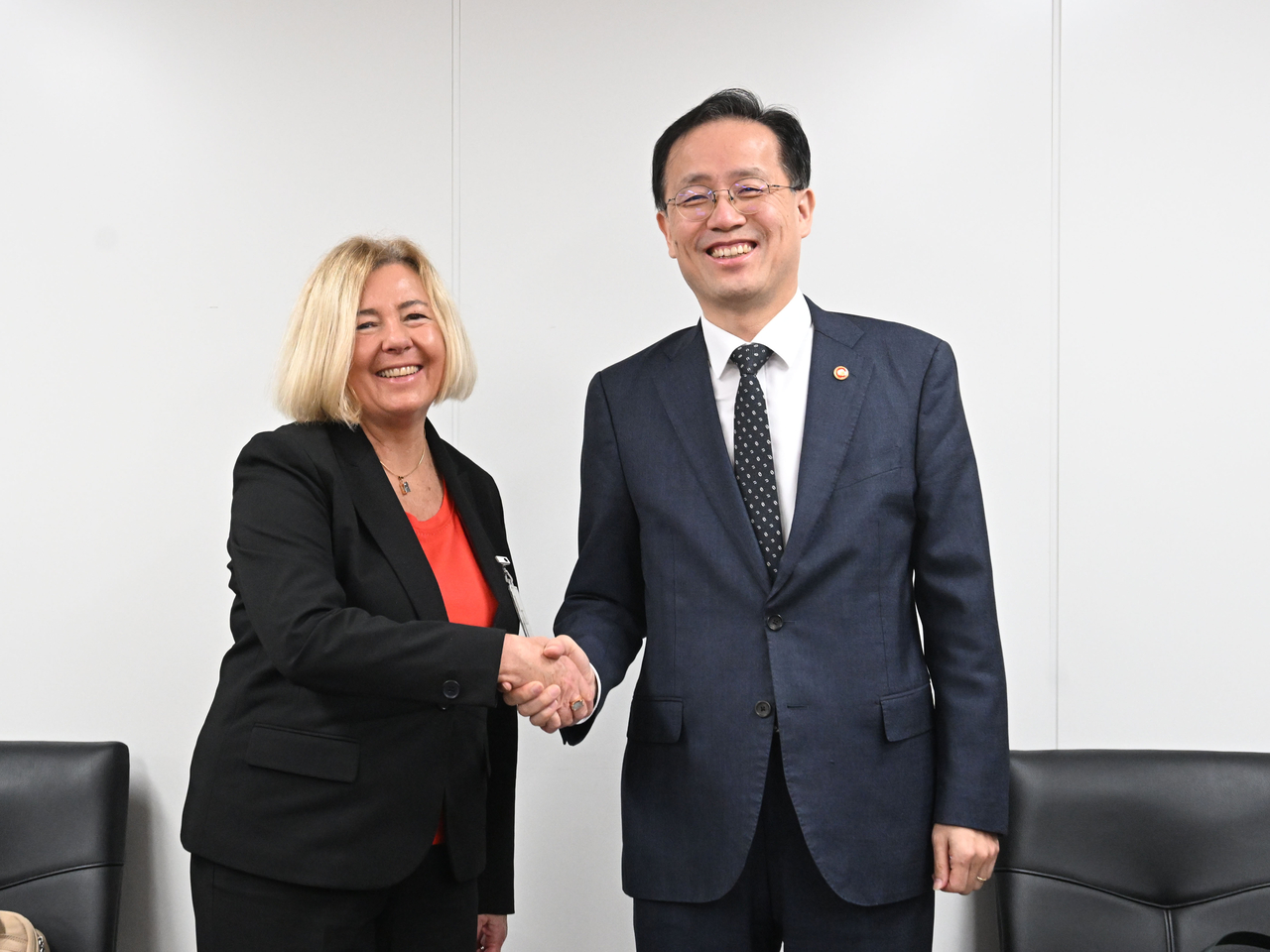
"So far, gains have been largely concentrated in the technology sector, and will only gradually spill over to the broader economy," said Corinne Delechat, who led the IMF mission to Korea.
The fund forecast inflation of 2.7 percent this year and 2.3 percent in 2027 as domestic demand strengthens, keeping price growth above BOK's 2 percent target. Uncertainty remains high, with risks to growth tilted to the downside, it said.
Even so, the IMF called for tighter monetary and fiscal policies, citing an economy operating above potential and inflation exceeding its target.
"Further monetary tightening is appropriate to prevent inflationary pressures from becoming entrenched," Delechat said.
The fund also recommended a more restrictive fiscal stance, alongside targeted support for vulnerable households and businesses. It welcomed the creation of the Future Response Fund, saying the fiscal stabilization vehicle should strengthen the government's ability to respond to economic cycles.
Beyond near-term policy, the IMF urged Korea to broaden its sources of growth by expanding AI adoption, narrowing wage gaps and raising productivity outside the Seoul metropolitan area. Greater export-market diversification and a continued shift toward renewable energy would help cushion external shocks, it said.
By Choi Ji-won (jwc@heraldcorp.com)