
Proposed limits on data center growth could delay orders for Korean chipmakers, while creating new opportunities for power equipment suppliers
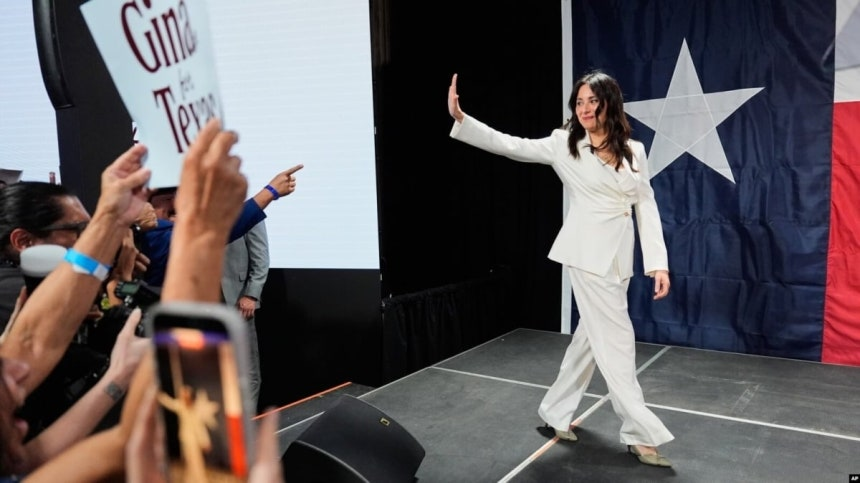
US Democrats’ sweep of major elected offices in Texas sets the stage for tighter limits on a leading hub of the artificial intelligence data center boom, with implications for Korean companies investing billions of dollars there and supplying its growth.
Gov.-elect Gina Hinojosa has pledged to keep new data center approvals on hold until lawmakers pass safeguards on power and water use, which could reshape the investment landscape for Samsung Electronics and Korean power equipment suppliers. Outgoing Gov. Greg Abbott had already ordered a pause on environmental permits and grid connections for data centers pending a state review.
The potential effects range from higher infrastructure costs to delays in customers’ data center projects, though proposals aimed at data centers do not automatically extend to chip factories.
“Stricter permitting reviews on power supply and environmental impact could delay data center construction and AI server deployment, constraining demand growth for HBM and other AI memory,” Hyundai Research Institute said in a Nov. 9 report on the US midterm results.
Why is Texas so important?
Texas leads the US in combined existing and under-construction data center capacity, with 26 gigawatts, compared with Virginia’s 13 GW, according to JLL’s midyear 2026 report.
It also topped the pipeline, with 525 data center buildings in the planning stage as of early November, according to tracker Cleanview. Virginia followed with 367, trailed by Pennsylvania with 275, Georgia with 165 and Ohio with 140. The five states accounted for 56.4 percent of planned US data center buildings.
That makes Texas policy consequential for Korean suppliers of the processors, high-bandwidth memory and electrical equipment that data centers need. Several Korean companies also have major operations in the state.
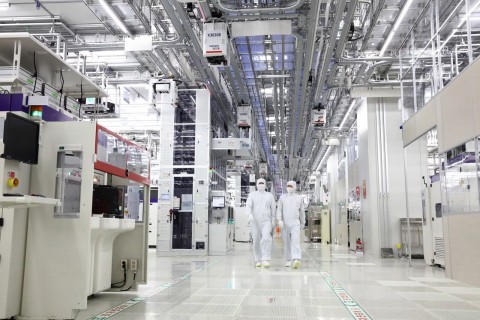
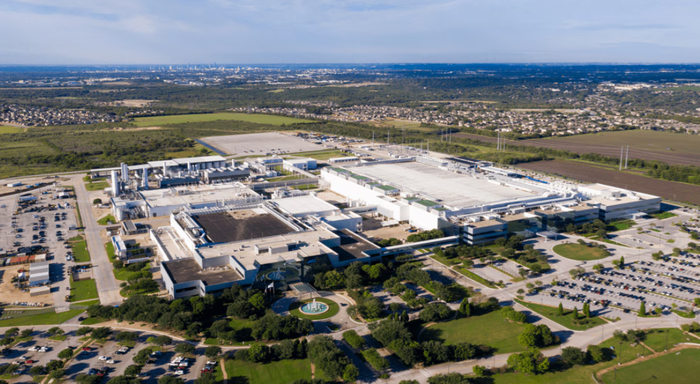
Samsung is the largest Korean industrial investor there. It plans to spend more than $37 billion on advanced logic manufacturing and research and development in Taylor and Austin, backed by a federal CHIPS Act award of as much as $4.74 billion. In October, it said it expects operations at its first Taylor fab to strengthen its global supply in 2027.
LS Electric runs a production, research and design campus in Bastrop, also near Austin. A $138.5 million October contract to supply switchgear and distribution transformers for on-site power generation at a Pennsylvania data center took its cumulative orders from Bloom Energy past $500 million since April 2025.
Their exposure extends beyond Texas. Local plants serve customers nationwide, and order books depend partly on the pace of the wider AI build-out.
Who won, and what changes do they want?
Hinojosa, who unseated Abbott, will be Texas’ first Latina governor and its first Democratic governor since Ann Richards over 30 years ago. A five-term state representative from Austin, Hinojosa is a civil rights and labor lawyer and a former Austin school board president.
Once in office in January, she plans to keep approvals paused while lawmakers consider new safeguards. Her platform calls for requiring union labors, increasing project transparency, protecting community water supplies and ending industry tax subsidies. She also wants developers to show that their projects would leave households’ electricity and water bills unaffected.
Her allies will hold other levers. Lt. Gov.-elect Vikki Goodwin, a four-term state representative who also backs a moratorium, will preside over the state Senate and help decide which bills advance, though its Republican majority may move to curb her powers.
Comptroller-elect Sarah Eckhardt, a state senator and former Travis County judge, will oversee the state’s tax collections and incentives, which she has promised to review more closely. Attorney General-elect Nathan Johnson, a Dallas state senator and corporate litigator, has vowed stronger consumer protection and competition enforcement.
Democrats also won the land and agriculture commissioner posts and the Texas House, which Republicans had controlled since 2002. Jon Rosenthal, who won a seat on the Railroad Commission, which regulates oil and gas, ran on managing data center power demand. James Talarico also became the first Democrat to win a US Senate race in Texas since 1988.
Where could tighter policies hurt?
Project timing is the clearest pressure point.
An extended approvals freeze or new conditions on electricity and water supply could delay data center construction and purchases of servers, chips and electrical equipment. Requiring developers to cover more infrastructure costs would also raise project costs, prompting some customers to rethink schedules or locations.
For Samsung’s fabs, the direct effect is less clear. Hinojosa’s proposals target data center developers. Any changes to the terms of existing chip manufacturing incentives, industrial water allocation, electricity charges or future subsidies would require separate decisions.
Analysts also expect the impact on overall chip demand to be limited. Some states are raising electricity rates for data centers while easing household bills, and big tech companies are preparing to absorb higher power costs. If US construction slows, companies can secure computing capacity elsewhere, making a sharp drop in memory demand unlikely.
“AI investment is central to big tech’s competitiveness, and given the race with China for the lead, there is little disagreement between the two parties,” said Park Yeon-ju, head of research at Mirae Asset Securities. “Even if regulations tighten, data center investment is unlikely to shrink significantly.”
Could Korean suppliers benefit?
Korean suppliers could potentially benefit. If developers must secure more of their own power, Korean makers of switchgear, transformers and energy storage systems could win more orders.
Project Star in Encinal shows the scale of that opportunity. South Korea has announced plans to invest in the proposed $22.3 billion, 6.47-gigawatt gas-fired power project under its US investment agreement. The plant is designed to supply an adjacent data center campus and send excess electricity to the grid.
More generation could ease power supply concerns, while questions over water use and community impact would remain.
For Korean companies, the legislative session opening in January will help determine how long the approvals pause lasts and how much more developers may have to spend on power and water. Those decisions could affect when new orders come through and what equipment developers need.
By Jo He-rim (herim@heraldcorp.com)