
Volatility returns to chip-heavy Korean market as doubts on AI boom deepen
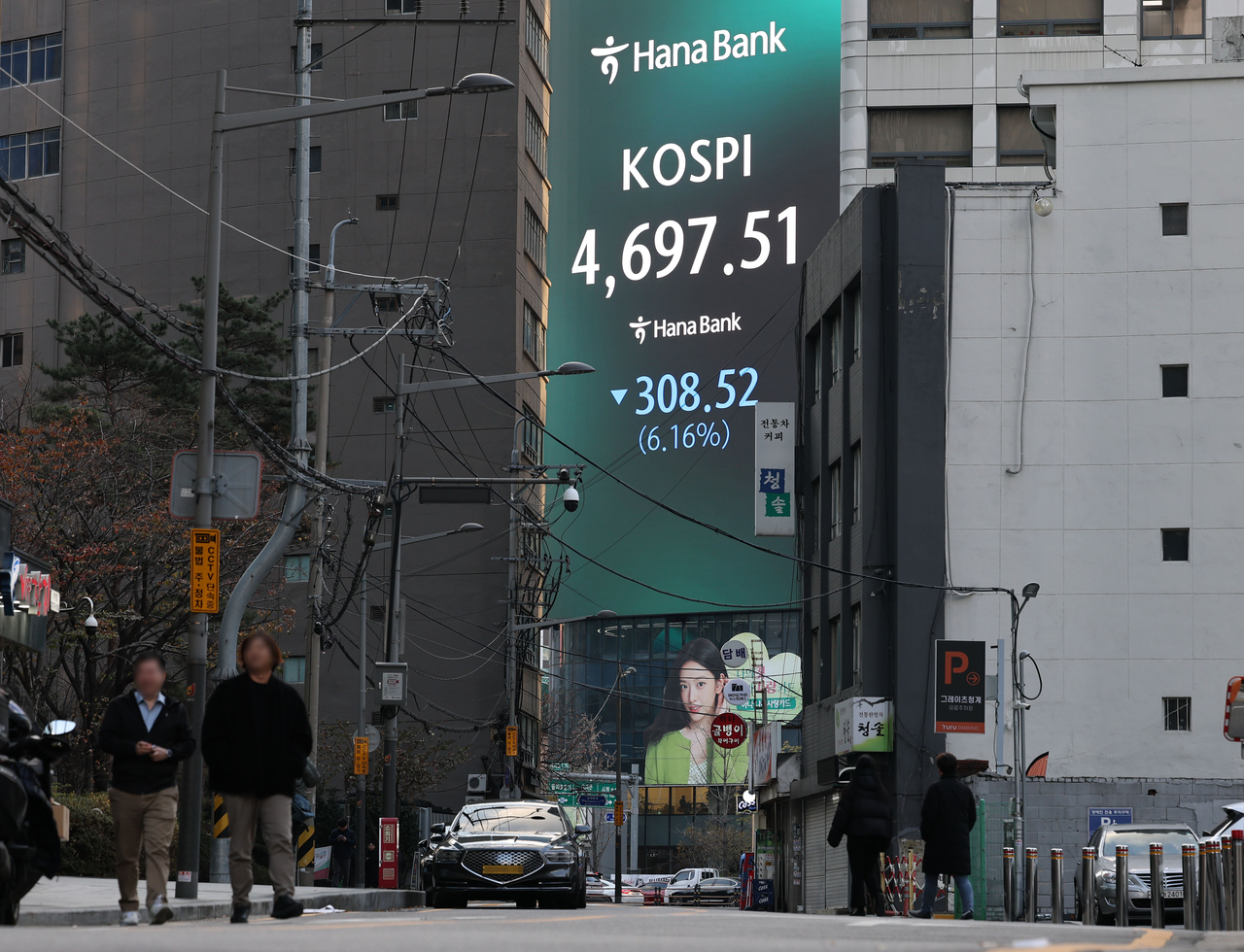
The South Korean benchmark Kospi remains gripped by heightened volatility as questions persist over whether its recovery can develop into a sustained rally or peter out as a temporary reprieve amid lingering concerns over an artificial intelligence bubble.
On Wednesday, the benchmark index fell 6.16 percent to 4,697.51, slipping below the 5,000 mark and reversing the previous session's 6.32 percent rebound.
The sharp rebound Tuesday, fueled in part by easing concerns over the AI sector following Nvidia CEO Jensen Huang's reinstatement, proved short-lived, with renewed selling pressure dragging the index lower.
The sharp reversal was reflected in consecutive sessions' trading safeguards. On Tuesday, a buy-side sidecar was triggered only to be reversed with a sell-side sidecar was activated in early trading during the following session, as foreign and institutional investors stepped up selling.
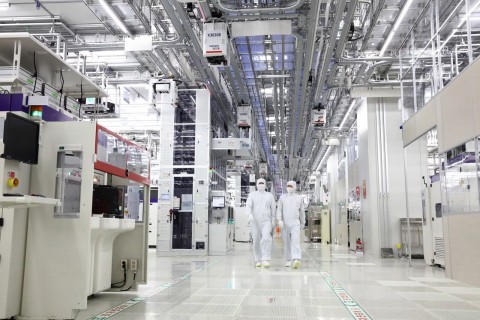
The latest turbulence underscores the Kospi's vulnerability to shifts in sentiment toward the AI sector, given the heavy weighting of semiconductor stocks such as Samsung Electronics and SK hynix.
While Tuesday's rebound was seen by some as a sign that fears of an AI bubble were easing, analysts largely characterized the gains as a technical bounce rather than evidence of a fundamental recovery.
"The market had reached a level at which a technical rebound was hardly surprising," said Kim Seong-hwan, an analyst at Shinhan Securities.
But further declines unsupported by fundamentals could expose the AI boom as a bubble.
"Tech stocks have found support at exactly this level of deviation from their moving averages on multiple occasions in the past. The only periods when stock prices deteriorated further were during the dot-com bubble burst and the global financial crisis," Kim said.
With the Kospi once again seeing sharp swings, brokerages broadly agree that a sustained market recovery will depend on clearer evidence of revenue growth and profitability among AI companies.
"The key to a sustained rebound is to demonstrate returns on AI investments and restore investor confidence in the sector," said Kim Yeon-ju, head of research at Mirae Asset Securities.
"This will depend on a renewed acceleration in revenue growth among AI companies such as Anthropic, continued capital expenditure by big tech firms and easing concerns over funding for neocloud companies."
She also highlighted the importance of memory market dynamics, particularly pricing trends amid tight supply.
"Amid an AI-driven supply-demand imbalance and a growing number of long-term memory supply agreements, investors will also be watching whether contract prices remain resilient despite recent weakness in the spot market," she said.
Policy challenges also remain. Delays in data center permitting amid a US Democratic electoral "blue wave," tighter controls on advanced semiconductor exports and the outcomes of various US government investigations involving Nvidia are among key factors that could shape the sector over the medium to long term.
Even with Huang back at the helm of Nvidia, unresolved regulatory risks could limit a recovery in AI-related stocks.
"Demand concerns are largely driven by policy uncertainty over restrictions on indirect GPU exports and delays in data center projects. Stock prices are unlikely to recover until there is greater clarity on these policy issues," said Ko Eui-young, an analyst at iM Securities.
Meanwhile, as chip stocks lose their appeal for the time being, investors are shifting their attention toward sectors expected to deliver growth beyond next year, with robotics, automakers and secondary battery-makers emerging as alternatives relatively less exposed to selling pressure.
"Selling pressure on sectors that led the market in the first half of the year is weighing on overall market sentiment," according to Kang Hye-sung, an analyst at Sangsangin Securities.
"A catch-up rally is expected to narrow the gap between market-leading and lagging sectors as the market fluctuates in the coming months."
By Im Eun-byel (silverstar@heraldcorp.com)